Siemens Industrial Edge at Microsoft Ignite 2026: A Preview Before the Doors Open
2026-11-16
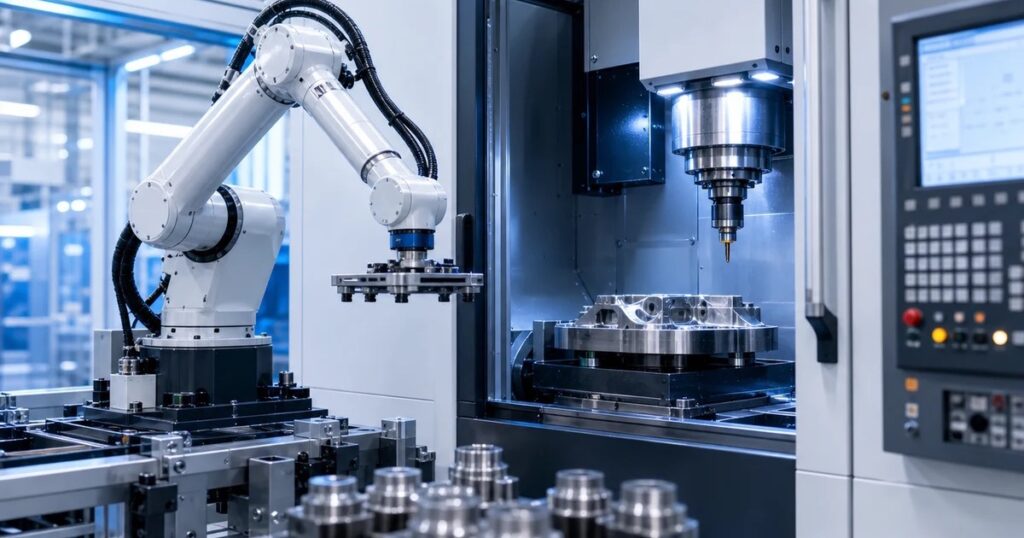
ExcerptTL;DR: Siemens did not launch anything at Microsoft Ignite on 13 November 2026 — it published a preview blog telling attendees where to find Industrial Edge at the show. Ignite 2026 opens on 17 November in San Francisco, and Siemens will be at booth #5269. The blog's actual argument is that the autonomous factory starts […]
TL;DR: Siemens did not launch anything at Microsoft Ignite on 13 November 2026 — it published a preview blog telling attendees where to find Industrial Edge at the show. Ignite 2026 opens on 17 November in San Francisco, and Siemens will be at booth #5269. The blog's actual argument is that the autonomous factory starts with making shop-floor data readable by AI: Industrial Edge connects machines and controllers, industrial DataOps turns raw signals into contextualized information, and that foundation is supposed to support closed-loop AI/ML and AI agents. The edge-to-cloud path runs through Azure IoT Operations and Microsoft Fabric. What is real and already shipped (Industrial AI Suite, WinCC Unified on Edge, Edge Management V2.0) comes from the Hannover Messe 2026 announcements — what is still a vendor vision (agentic AI acting on the shop floor) is not yet a product you can buy.
On 13 November 2026, Siemens published a blog post by Francisco (Paco) Franco, Strategy and Innovation Manager, titled "Paving the way to autonomous factories: Meet Siemens Industrial Edge at Microsoft Ignite". Several trade summaries have since described this as Siemens "unveiling" or "showcasing" a new Industrial Edge solution. That framing needs a correction before anything else: Microsoft Ignite 2026 has not opened yet. The event runs 17–20 November 2026 at the Moscone Center in San Francisco (with an online track 17–19 November), and the Siemens post is an invitation and preview — a statement of what the company intends to discuss at booth #5269, not an announcement of a new product.
That said, the blog is worth reading carefully, because it compresses Siemens' entire edge-to-AI argument into about 500 words. This article unpacks what the blog actually claims, separates it from what Siemens has already shipped, and lists what the company has not disclosed. All statements below are traceable to the Siemens blog of 13 November 2026, the Siemens press release from Hannover Messe 2026 (21 April 2026, reference HQDIPR202604177386EN), or Microsoft's official Ignite pages.
What did Siemens actually publish on 13 November 2026?
**The 13 November post is a pre-event blog, not a launch announcement.** It has no product name, no part numbers, no release date and no pricing. Its verifiable content is the following:
| Item | What the blog says | Verifiable? |
|---|---|---|
| Publication date | 13 November 2026, Siemens Blog, author Francisco (Paco) Franco, Strategy and Innovation Manager | Yes — blog page |
| Event | Microsoft Ignite 2026, 17–20 November, Moscone Center, San Francisco | Yes — Microsoft Ignite official pages |
| Siemens presence | Booth #5269; sponsor directory entry on ignite.microsoft.com | Yes — blog + sponsor directory |
| Core claim | "The autonomous factory therefore starts by making the shopfloor AI-ready" | Yes — direct quote (vendor framing) |
| Data path | Industrial Edge connects machines, controllers and industrial systems; industrial DataOps cleans, harmonizes and enriches raw signals with production context | Yes — direct quote (vendor framing) |
| AI path | Models trained in cloud or on premises, deployed at the edge; use cases from visual inspection and anomaly detection to optimization and closed-loop AI/ML | Yes — direct quote (vendor framing) |
| Agentic step | "Industrial Edge turns the physical world of production into a digital context that AI agents can understand and act upon" | Yes — direct quote (vision statement) |
| Cloud integration | Integration with Microsoft Azure IoT Operations; data flows to Microsoft Fabric and Fabric Real-Time Intelligence; Azure IoT Hub supported for direct edge-to-cloud architectures | Yes — direct quote; integration announced earlier by both vendors |
| New products announced | None | Yes — absence confirmed |
The framing matters for procurement teams: if a supplier quotes "Siemens launched Industrial Edge at Ignite" as a basis for a purchase decision, the correct source to demand is the Hannover Messe 2026 press release, which is where the shippable facts live.
How does Industrial Edge turn shop-floor data into AI-ready information?
**Siemens' argument is that AI fails on the shop floor not because models are weak but because raw PLC signals carry no context.** The blog's example is deliberately concrete: through industrial DataOps, "a temperature value becomes the temperature of a specific asset, on a specific line, producing a specific product". Without that enrichment, a model sees a number; with it, the model — and the human — can act on it.
The blog stacks three layers to get there:
- Industrial connectivity: connecting machines, controllers and industrial systems across heterogeneous production environments — in practice, the edge device sits alongside PLCs and reads data where the protocols live. Legacy controllers are part of that picture; a fleet running SIMATIC S7-300 CPU modules or distributed I/O such as SIMATIC ET 200SP digital output modules is exactly the heterogeneous environment the pitch targets.
- Edge computing: processing data close to the source, so latency, bandwidth and data-residency constraints do not force every value into the cloud.
- Industrial DataOps: cleaning, harmonizing and enriching signals with production context, so the output is information "that not only humans, but AI can understand".
None of these three layers is new to the November blog — they restate the platform logic Siemens has been building since Industrial Edge launched. What the blog adds is the sequencing: data first, models second, agents third.
Which parts of the Industrial Edge stack are already generally available?
**The shippable facts come from Hannover Messe 2026, not Ignite.** Siemens' 21 April 2026 press release (HQDIPR202604177386EN) fixed the following status:
| Component | Status per Siemens (April 2026) |
|---|---|
| Industrial AI Suite (based on Industrial Edge) | Generally available; supports the AI lifecycle from model deployment to retraining, including combining image data with production data from MES or controllers |
| WinCC Unified on Industrial Edge | Generally available — decentralized SCADA at the edge; WinCC Open Architecture available as an Edge App and for the virtual PLC (SIMATIC S7-1500v) |
| Industrial Edge Management V2.0 | Released — redesigned UI, enhanced data management; supports additional hypervisors including OpenShift and Hyper-V |
| Industrial Information Hub | Expanded — bidirectional data flow between edge devices and central IT systems; available on ARM-based devices such as the SIMATIC IOT2050 (battery-powered operation possible, LTE networking planned for a future release) |
| IEC 62443-4-2-certified security functions, air-gapped operation | Targeted for release in the second half of 2026 — not yet available at press time |
| UL Solutions certification | "Smart Systems Verified – Platinum" awarded to Industrial Edge and the virtual PLC, covering six categories including connectivity, resilience and cybersecurity |
| Partner ecosystem | Machine vision and quality inspection with 36Zero Vision, MVTec and Basler; rugged industrial PCs from OnLogic for oil & gas and remote edge locations |
Two dates deserve attention. First, the IEC 62443-4-2-certified security functions and air-gapped operation were "targeted for release in the second half of 2026" as of April — whether they have shipped since has not been confirmed in the sources checked for this article, and Ignite week is when such confirmation would be expected. Second, the Industrial AI Suite's retraining capability — combining image data with production data from MES or controllers — is the concrete mechanism behind the blog's closed-loop AI language, which is why the two documents read as one story rather than two.
On the visualization side, WinCC Unified reaching general availability on Industrial Edge connects the edge story to the panel fleet many plants already run. A shop floor using SIMATIC HMI Unified Comfort panels such as the 15.4-inch 6AV2124-0QC02-0AX1 is already on the WinCC Unified runtime path, which is the same runtime family Siemens now offers as decentralized SCADA at the edge.
How does the Siemens-to-Microsoft edge-to-cloud path actually work?
**The blog names three Microsoft integration points, each at a different layer.** They are not new announcements — Siemens and Microsoft have demonstrated this integration since earlier in 2026, including the joint manufacturing workflow at Hannover Messe — but the Ignite blog is the clearest single-page summary of the architecture:
| Layer | Microsoft component | Role per the blog |
|---|---|---|
| Edge-to-cloud bridge | Azure IoT Operations | Connects the OT and IT data worlds; carries industrial data from the shop floor through the edge into Azure |
| Analytics and AI layer | Microsoft Fabric and Fabric Real-Time Intelligence | Combines real-time shop-floor information with enterprise data, analytics and AI |
| Direct connectivity | Azure IoT Hub | Supported for established direct edge-to-cloud architectures, "giving manufacturers flexibility in how they build their edge-to-cloud architecture" |
The loop the blog draws — connect, contextualize, analyze, learn, decide, act — is therefore split across two vendors: Siemens owns the connectivity, contextualization and edge execution; Microsoft owns the analytics, training and enterprise AI layer. For buyers, the practical question is not whether the path exists but which of the three Microsoft layers their data volume and latency requirements actually need, because they price very differently.
This is also where the competitive map gets interesting. Rockwell Automation has been moving in the same direction with its own edge-compute play, covered previously in Rockwell LogixEdge: Logix Control and Containerized Workloads on One Industrial PC. The structural difference is that Siemens is leaning on a hyperscaler partnership for the analytics layer, while the LogixEdge approach keeps containerized workloads on the plant's own industrial PC. Both converge on the same premise — edge hardware close to the controller — from opposite ends.
What are closed-loop AI and AI agents actually supposed to do on the shop floor?
**Siemens' own wording is a staged vision, not a shipped capability list, and the distinction matters.** The blog's sequence is: with AI-ready data as the foundation, models can be trained in the cloud or on premises and deployed at the edge, enabling "use cases from visual inspection and anomaly detection to optimization and closed-loop AI/ML". The next step — agentic AI — is described prospectively: "Industrial AI agents will increasingly need to understand what is happening across machines and production lines, reason about that information and interact with industrial workflows."
The goal state is "systems that can sense, understand, decide and act within defined operational boundaries". Note the qualifier: within defined boundaries. Siemens is not claiming agents make unrestricted control decisions. The blog also states that Industrial Edge provides "the secure, scalable, and centrally managed infrastructure to deploy connectivity, DataOps, AI and any other custom production-critical application in the shopfloor" — the deployment platform claim is concrete; the agent behavior claim is directional.
For maintenance and reliability teams, the nearest-term versions of this are already visible in the GA components: visual inspection and predictive maintenance through the Industrial AI Suite, and anomaly detection on edge-processed data. The agent layer — software that reasons across lines and acts in workflows — should be treated as a roadmap item until Siemens publishes productized agent functions with version numbers and support boundaries.
Siemens has been applying a similar "AI where the data is born" logic outside the factory as well — for example, the intelligent valve the company introduced for AI data center cooling, covered in Siemens Adds a Stainless Steel Intelligent Valve for AI Data Center Cooling. The common thread is embedding intelligence in the physical asset layer rather than only in dashboards.
What has Siemens not disclosed?
**The 13 November blog contains no commercial or product-specific commitments, and the gaps are as important as the claims.** As of publication, Siemens has not disclosed:
- Any new Industrial Edge product, app or version tied to Ignite — the blog announces a booth, not a release.
- Whether the IEC 62443-4-2-certified security functions and air-gapped operation targeted for 2H 2026 have reached general availability.
- Pricing, packaging or part numbers for the Industrial AI Suite or any edge hardware configuration referenced at the show.
- Named, productized AI agent functions — the agentic AI language remains a capability direction without a product SKU.
- Specific Ignite session titles, demos or co-announcements with Microsoft beyond booth #5269.
- Quantified performance or ROI figures for closed-loop AI use cases (the blog uses no statistics at all).
Everything in this article's two tables is sourced; anything not in them should be read as unconfirmed until Siemens or Microsoft publishes it during the event.
What should plant teams watch for during Ignite week?
**Four concrete signals would turn this preview into procurement-relevant news.** Teams evaluating edge infrastructure for AI readiness can watch for:
- Shipping confirmation for the IEC 62443-4-2 security functions and air-gapped operation — this was explicitly targeted for 2H 2026 and is the single most consequential date-bound commitment in the April release.
- Versioned agent capabilities — any Siemens announcement that turns "industrial AI agents" from prose into a named Edge App with support boundaries.
- Azure IoT Operations packaging details — how the OT-IT bridge is licensed and whether edge device requirements change.
- Partner app availability — the MVTec, Basler, 36Zero Vision and OnLogic integrations becoming orderable configurations rather than ecosystem references.
If none of these surface during the event, the correct conclusion is that Ignite 2026 was a positioning moment for Siemens' edge story, not a delivery milestone — which is a normal and honest outcome for a pre-event blog.
Frequently asked questions
Did Siemens launch a new Industrial Edge product at Microsoft Ignite 2026?
No. The 13 November 2026 blog post is a preview inviting attendees to booth #5269; it announces no new product, version or part number. The most recent shippable Industrial Edge announcements — Industrial AI Suite general availability, WinCC Unified on Edge, and Industrial Edge Management V2.0 — date from the Hannover Messe 2026 press release of 21 April 2026 (HQDIPR202604177386EN).
When and where is Microsoft Ignite 2026, and where is the Siemens booth?
Microsoft Ignite 2026 runs 17–20 November at the Moscone Center in San Francisco, with the online event on 17–19 November. Siemens is listed in the sponsor directory and invited attendees to booth #5269 to discuss Industrial Edge and Microsoft technologies.
What does industrial DataOps actually change about my plant data?
It adds production context to raw signals. Siemens' example: a temperature value becomes the temperature of a specific asset, on a specific line, producing a specific product. That enrichment happens at the edge before data reaches analytics, which is what the company means by "AI-ready" shop-floor information.
Can Industrial Edge work with older SIMATIC controllers like the S7-300?
Siemens positions Industrial Edge for "heterogeneous production environments", and its connectivity layer is designed to sit alongside existing PLCs rather than replace them. However, the blog does not publish a controller compatibility list, so specific S7-300 integration should be verified against the current Industrial Edge connectivity app documentation before committing to a retrofit.
Which Siemens Industrial Edge components are generally available today?
Per the 21 April 2026 press release: the Industrial AI Suite, WinCC Unified as decentralized edge SCADA, Industrial Edge Management V2.0 (with OpenShift and Hyper-V support), and the expanded Industrial Information Hub with bidirectional data flow and ARM support on devices such as the SIMATIC IOT2050. IEC 62443-4-2-certified security functions and air-gapped operation were targeted for the second half of 2026.
How does Industrial Edge connect to Microsoft Azure?
Through three named paths: Azure IoT Operations as the OT-IT bridge carrying shop-floor data into Azure; Microsoft Fabric and Fabric Real-Time Intelligence for combining real-time edge data with enterprise analytics and AI; and direct connectivity via Azure IoT Hub for established edge-to-cloud architectures. Siemens presents these as alternatives, letting manufacturers choose the architecture depth.
Are Siemens' industrial AI agents a product I can buy now?
No productized agent SKU has been announced in the sources checked. The blog describes agentic AI as the next step — agents that understand, reason and interact with industrial workflows within defined operational boundaries. Until Siemens publishes a named agent product with versioning and support boundaries, the agent language should be treated as a roadmap direction.
What is the difference between Siemens' edge-to-cloud approach and keeping workloads on-premise?
The Siemens-Microsoft architecture moves analytics, model training and enterprise AI to Azure while executing connectivity, DataOps and latency-critical AI at the edge. An alternative such as Rockwell's LogixEdge keeps containerized workloads on the plant's own industrial PC. The choice hinges on data governance, latency requirements and how much of the analytics stack a team wants to run in a hyperscaler tenant versus plant-floor hardware.
Sources and verification notes
- Siemens Blog — Paving the way to autonomous factories: Meet Siemens Industrial Edge at Microsoft Ignite (13 November 2026) — primary source for all blog claims; verified author byline and date.
- Siemens press release — Industrial Edge ecosystem strengthens data and AI integration (Hannover Messe 2026, 21 April 2026, HQDIPR202604177386EN) — source for general-availability statuses, IEC 62443-4-2 targeting, UL Solutions certification and partner ecosystem.
- Microsoft Ignite — official event pages — source for event dates (17–20 November 2026) and Moscone Center, San Francisco venue.
- Microsoft Ignite sponsor directory — Siemens — Siemens exhibitor listing.
- Siemens — Industrial Edge product pages — platform reference.
Verification note: StreetInsider-style aggregator framing ("Siemens unveils at Ignite") was checked against the primary Siemens blog and Microsoft event pages. The event had not opened at the time of the blog's publication; this article therefore describes a preview, and all availability claims are anchored to the April 2026 Hannover Messe press release rather than to Ignite itself.
Related Posts