
Woodward 5466-253 Analog Combo Module | 8 AI 4 AO
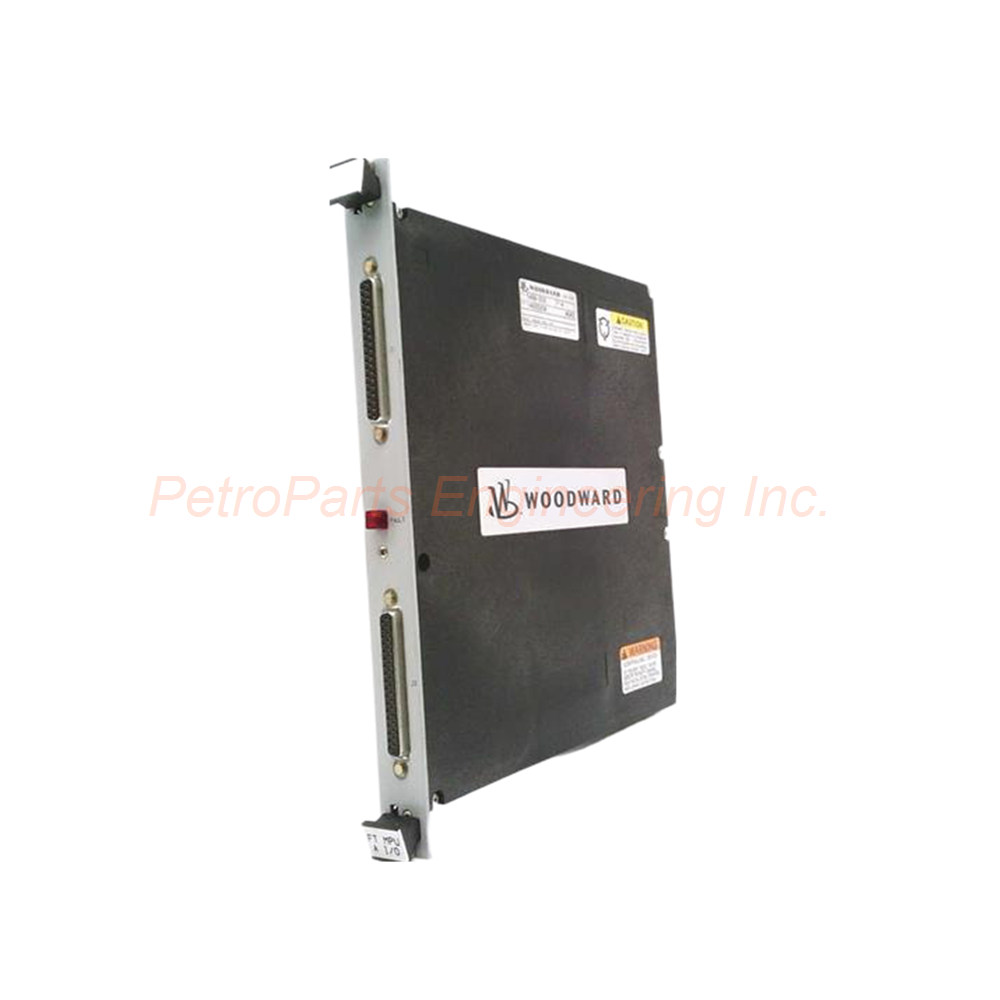

Introduction:
The Woodward 5466-253 analog combo module provides 8 analog inputs and 4 outputs. Features speed sensor inputs and proportional actuator drivers for industrial control.
 Customer Reviews
UBEST Automation – Trusted Global Automation Parts Supplier
We offer a wide range of in-stock industrial automation spare parts. All products come with a 12-month warranty and a 30-day refund for quality issues.
Product Attributes:
Notice: For real-time prices and inventory, please click the button below to contact us.
Woodward 5466-253 Analog Combo Module for Industrial Control
The Woodward 5466-253 is an analog combo module from Woodward. This unit comes from the United States of America. Specifically, the 5466-253 handles diverse inputs and outputs for many applications. The module is currently in stock for immediate shipment. Engineers use this module for turbine control, generator management, and industrial automation.
Module Overview and Functionality
Regarding the functional design, the Woodward 5466-253 boasts four speed sensor inputs. It also includes eight analog inputs for process measurements. Additionally, four analog outputs provide control signals to field devices. Two proportional actuator driver outputs complete the capability set. Consequently, this module offers exceptional flexibility in one compact unit.
Speed Sensor Input Capabilities
The speed sensor inputs accommodate different types of speed sensors. Both magnetic pick-up inputs and proximity probe inputs work with this module. Consequently, seamless integration occurs with various rotating machinery types. Precise and accurate speed measurement becomes possible across many applications. Turbines, compressors, and generators all benefit from this feature.
Update Time Performance
The update time reaches 5 milliseconds for both inputs and outputs. This fast update rate suits real-time control applications effectively. Your control loop responds quickly to changing process conditions. Therefore, this module works well for high-speed machinery protection.
Analog Input Specifications
Turning to analog inputs, the module provides 8 channels for measurements. The update time for these inputs also reaches 5 milliseconds. The input range spans 0-25 mA for flexible sensor compatibility. Specifically, the module supports 4-20 mA input signals as the primary range. This range is widely used in industrial control and measurement applications.
Transducer Compatibility Options
For current inputs, two transducer options are available. Two-wire ungrounded (loop powered) transducers work seamlessly. Alternatively, isolated (self-powered) transducers integrate just as easily. Both types connect without additional external components.
Common Mode Rejection Performance
All analog inputs boast an impressive 200 Vdc of common mode rejection. This high rejection minimizes the impact of common-mode noise on measurements. Disturbances from nearby equipment have less effect on readings. Consequently, your measurements remain accurate in noisy electrical environments.
Non-Isolated Device Precautions
When interfacing with a non-isolated device, additional precautions may apply. If the device can reach over 200 Vdc with respect to control common, take action. The use of a loop isolator is advised for this situation. The isolator breaks any return current paths that cause erroneous readings. This precaution ensures data integrity and prevents ground difference issues.
Input Resistor Design
In the design of all current inputs, 200 ohm resistors are placed across each input. This resistor enhances accuracy and stability for measurements. The overall precision and reliability of analog input measurements improves significantly.
Analog Output Specifications
Regarding analog outputs, the module provides 4 channels for control signals. These outputs drive field devices based on control calculations. The update time matches the inputs at 5 milliseconds.
Proportional Actuator Driver Outputs
The module offers two proportional actuator driver outputs for valve control. Each output is configurable for either 4-20 mA or 20-160 mA operation. This versatile configuration enables seamless compatibility with different actuator types. Consequently, precise control over valves, motors, and other proportional devices becomes possible.
Integration Benefits
The module's integration of multiple functionalities saves valuable panel space. System design simplifies when one module does the work of several. Furthermore, wiring complexity reduces significantly compared to separate modules. The consolidation streamlines the installation process for your team.
Reliability and System Reliability
Since there are fewer points of potential failure, system reliability enhances. The robust design uses high-quality components for consistent performance. Even in demanding industrial environments, this module performs reliably.
Target Industries
The Woodward 5466-253 suits many industrial sectors. Power generation facilities benefit from its turbine control capabilities. Oil and gas applications use it for compressor control. Petrochemical plants rely on it for process regulation. Any industry needing precise analog control will find value here.
Cable and FTM Compatibility
All modules across the system use the same cable type. They also use the same Fault Tolerant Modules (FTMs). This uniformity ensures compatibility across your entire Woodward system. Spare parts inventory simplifies as a result.
Step-by-Step Installation Guide
Follow these steps to install your Woodward 5466-253 correctly.
Step 1: Verify System Compatibility
First, confirm your Woodward system supports this analog combo module. Check that the firmware version matches the module requirements. Then, ensure you have the correct cables and FTMs for installation. Also, verify the mounting location has adequate space.
Step 2: Power Down the System
Next, shut down power to the Woodward control chassis completely. Disconnect the main power supply as a safety precaution. Wait for all capacitors to discharge fully. Safety must come first during this procedure.
Step 3: Install the Module
Now, insert the Woodward 5466-253 into an available chassis slot. Push firmly until the module seats into the backplane connector. Secure the module with the retaining screws provided. Ensure the module sits flush with adjacent units.
Step 4: Connect Speed Sensor Wiring
After mounting, connect your speed sensors to the appropriate inputs. For magnetic pick-up sensors, follow the polarity shown in the manual. For proximity probes, connect the signal and power leads correctly. Tighten all terminal screws to the specified torque.
Step 5: Connect Analog Inputs
Wire your 4-20 mA transducers to the analog input channels. For two-wire loop powered devices, connect the power supply appropriately. For isolated self-powered transducers, connect the signal leads only. Then, verify each input has the 200 ohm resistor across it.
Step 6: Connect Actuator Drivers and Outputs
Wire the proportional actuator drivers to your valves or positioners. Configure each output for either 4-20 mA or 20-160 mA as needed. Then, connect the analog output signals to your final control elements. Finally, apply power and test each channel for proper operation.
Complete Package Contents
Your Woodward 5466-253 shipment includes the following items:
Woodward 5466-253 Analog Combo Module (1 unit)
Product documentation and installation manual
Terminal blocks for field wiring connections
Module labeling sheet for channel identification
Note: Shipping partners include FedEx, UPS, and DHL.
Frequently Asked Questions (FAQ)
Q1: How many analog inputs does the Woodward 5466-253 provide?
The Woodward 5466-253 provides 8 analog input channels for measurements. Each channel accepts 0-25 mA signals with 4-20 mA as the primary range. The update time for all inputs is 5 milliseconds.
Q2: What types of speed sensors work with this module?
The Woodward 5466-253 works with magnetic pick-up sensors and proximity probes. Both types connect directly to the four speed sensor inputs. This flexibility suits various rotating machinery applications.
Q3: What is the common mode rejection rating for analog inputs?
All analog inputs on the 5466-253 have 200 Vdc of common mode rejection. This high rating minimizes noise impact on measurements. Accurate readings occur even in electrically noisy environments.
Q4: Can the actuator driver outputs be configured for different current ranges?
Yes, each proportional actuator driver output is configurable. Choose between 4-20 mA or 20-160 mA operation per channel. This flexibility matches different actuator requirements seamlessly.
Q5: What is the update time for this Woodward module?
The Woodward 5466-253 has an update time of 5 milliseconds. This applies to both inputs and outputs for consistent performance. Fast update rates suit real-time turbine and generator control applications.