
Yokogawa SNT501-53 Optical ESB Bus Repeater Slave Module

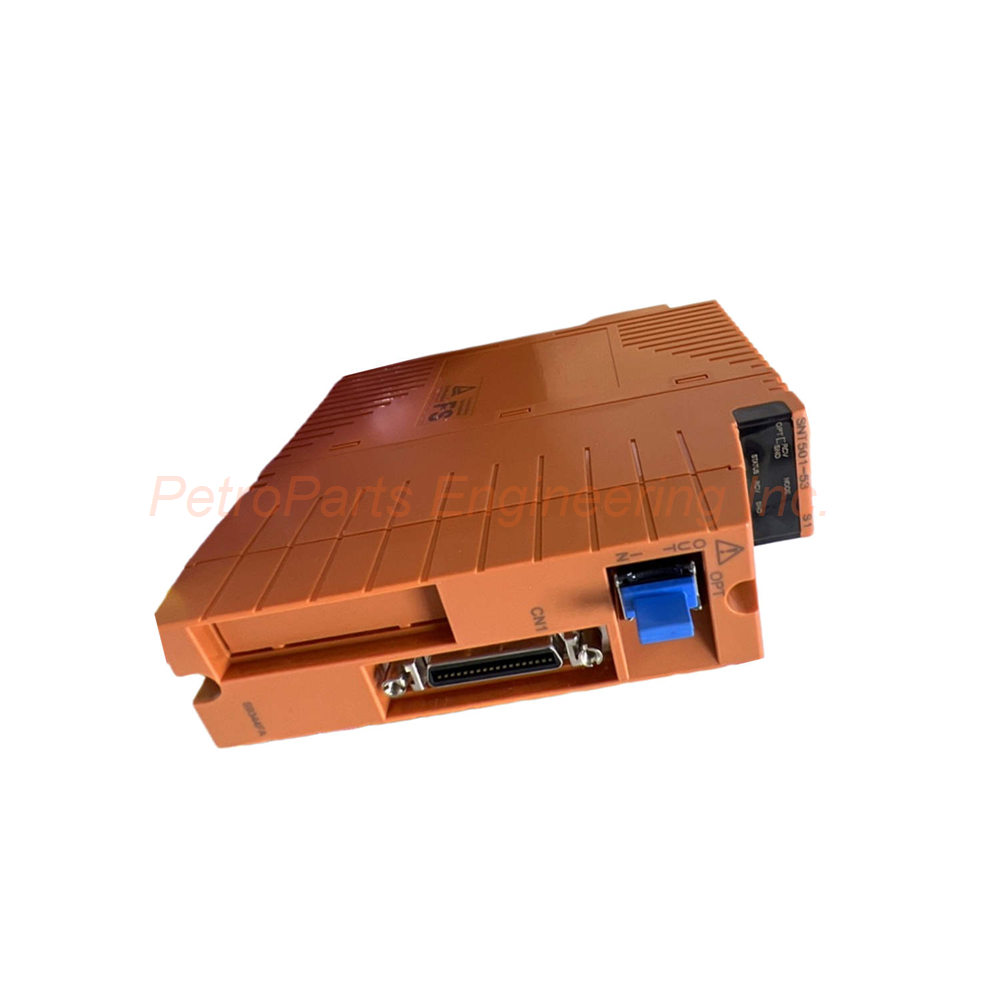
Introduction:
Optical ESB Bus repeater slave module for extended transmission. Converts ESB Bus to optical signal. Supports star or chain topology.
 Customer Reviews
UBEST Automation – Trusted Global Automation Parts Supplier
We offer a wide range of in-stock industrial automation spare parts. All products come with a 12-month warranty and a 30-day refund for quality issues.
Product Attributes:
Notice: For real-time prices and inventory, please click the button below to contact us.
Product Overview
Module Function and Purpose
The Yokogawa SNT501-53 is an Optical ESB Bus Repeater Slave Module for distributed control systems. This module converts ESB Bus signals into optical signals for transmission. The ESB Bus connects safety control units, safety node units, and N-IO nodes. Consequently, the SNT501-53 extends communication distances beyond copper cable limitations. When paired with the SNT401 master module, transmission reaches up to 5 km.
Model Breakdown Explanation
The model number SNT501-53 reveals specific configuration details. The "5" indicates no explosion protection is included with this module. "3" specifies the ISA Standard G3 option with extended temperature range (-20 to 70°C). Therefore, this configuration suits harsh industrial environments with corrosive gases. Please note that the temperature option is intended for maintenance purposes only.
System Architecture
The Optical ESB Bus system uses both master and slave modules for complete functionality. The SNT401 master module connects from the ESB Bus Coupler Module (SEC401 or SEC402) or the ESB Bus Interface Module (SSB401). The SNT501-53 slave module, in contrast, connects from the master module through fiber optic cable. Both modules then connect to ESB Bus Interface Modules on safety node units. Consequently, this architecture enables flexible system design.
Technical Specifications
General Specifications
Manufacturer: Yokogawa
Product Number: SNT501-53
Product Type: Optical ESB Bus Repeater Slave Module
Function: ESB Bus optical transport
Current Consumption: 0.5 A
Weight: Approximately 0.3 kg
Model Option Breakdown
| Code | Option | Description |
|---|---|---|
| 5 | Explosion Protection | No explosion protection |
| 3 | Environmental Option | ISA Standard G3 with -20 to 70°C (maintenance purpose only) |
Connection Specifications
The Yokogawa SNT501-53 supports flexible connection topologies.
Connection Method: Star type connection or chain type connection
Availability: Both star and chain type connections are supported
Number of Connecting Stages: Maximum two stages
Transmission Distance
Standard Maximum Distance: 5 km total for two stages
Vnet/IP System (R1.03 or later): Up to 10 km total for two stages
System Compatibility
The SNT501-53 works with several Yokogawa components.
Master Module: SNT401 Optical ESB Bus Repeater Master Module
N-ESB Bus Module: S2EN501
ESB Bus Coupler Modules: SEC401, SEC402
ESB Bus Interface Module: SSB401
Safety Node Unit: SNB10D
Environmental Specifications
Operating Temperature (with option 3): -20°C to 70°C (maintenance purpose only)
ISA Standard G3: Corrosive gas resistance for harsh environments
Installation Guide
Follow these steps to install the Yokogawa SNT501-53 correctly.
Power Down System: First, disconnect power from the safety control unit completely.
Mount Module: Next, insert the SNT501-53 into the designated slot.
Connect Fiber Optic Cable: Then, attach the optical fiber cable from the SNT401 master module.
Connect ESB Bus Cable: After that, connect the ESB Bus cable to the SSB401 interface module.
Configure Topology: Meanwhile, set the module for star or chain connection as required.
Restore Power: Finally, reapply power and verify the module status.
The SNT501-53 requires careful attention to the total number of connecting stages. Therefore, do not exceed two stages for standard applications. For Vnet/IP systems with R1.03 or later, however, the total distance reaches 10 km. Consequently, proper installation ensures reliable optical communication across extended distances.
Package List
The package includes the following physical items.
Yokogawa SNT501-53 Optical ESB Bus Repeater Slave Module (1 piece)
Product label with part number and options
Anti-static protective bag for safe transport
Note: Optical fiber cables are not included. ESB Bus cables are sold separately. The SNT401 master module is not included with this slave module.
Frequently Asked Questions (FAQ)
1. What is the purpose of the SNT501-53 module?
The Yokogawa SNT501-53 converts ESB Bus signals to optical signals for long-distance transmission. Therefore, it extends communication distances between safety control units and node units. When paired with an SNT401 master module, transmission reaches up to 5 km. Consequently, this module enables geographically distributed safety systems.
2. What is the maximum transmission distance for the SNT501-53?
The Yokogawa SNT501-53 supports a maximum distance of 5 km for two stages. For Vnet/IP systems with R1.03 or later, the total distance reaches 10 km. Therefore, distance depends on your system version. Consequently, verify your system revision before planning long-distance installations.
3. What connection topologies does the SNT501-53 support?
The Yokogawa SNT501-53 supports both star type and chain type connections. Therefore, you can choose the topology that best suits your plant layout. Both methods are fully supported by the module. Consequently, system design flexibility is significantly enhanced.
4. How many SNT501-53 modules can be connected in series?
The Yokogawa SNT501-53 supports a maximum of two connecting stages. Therefore, you cannot chain more than two repeater stages together. This limitation ensures signal integrity across the optical link. Consequently, plan your network topology within this constraint.
5. What is the ISA Standard G3 option on the SNT501-53?
The ISA Standard G3 option on Yokogawa SNT501-53 provides resistance to corrosive gases. Therefore, this module suits chemical plants and refineries with harsh atmospheres. The temperature range extends from -20°C to 70°C. Consequently, the module remains reliable in demanding environmental conditions.
6. What is the difference between SNT401 and SNT501?
The SNT401 is the Optical ESB Bus Repeater Master Module, whereas the SNT501-53 is the slave module. The master connects directly to ESB Bus Coupler Modules or Interface Modules. The slave, in contrast, connects from the master through fiber optic cable. Consequently, both modules work together to extend the ESB Bus.
7. What is the current consumption of the SNT501-53?
The Yokogawa SNT501-53 consumes 0.5 A of current. Therefore, power supply requirements are relatively low for a communication module. The module weight is approximately 0.3 kg. Consequently, multiple modules can be installed without excessive power or mechanical load.
Related Accessories
Enhance your ESB Bus optical extension system with these compatible parts.
Master Module: Yokogawa SNT401 Optical ESB Bus Repeater Master Module
Fiber Optic Cable: Yokogawa specified optical cable for transmission distances up to 10 km
ESB Bus Cable: Yokogawa SEC401 compatible cable for module connections
Safety Node Unit: Yokogawa SNB10D for safety system integration
N-ESB Bus Module: Yokogawa S2EN501 for slave side connections
Always use genuine Yokogawa components with the SNT501-53. Therefore, third-party fiber optic cables may cause signal attenuation or connection failures. In addition, verify system compatibility before ordering. Consequently, using authentic parts ensures optimal optical communication and system reliability.