
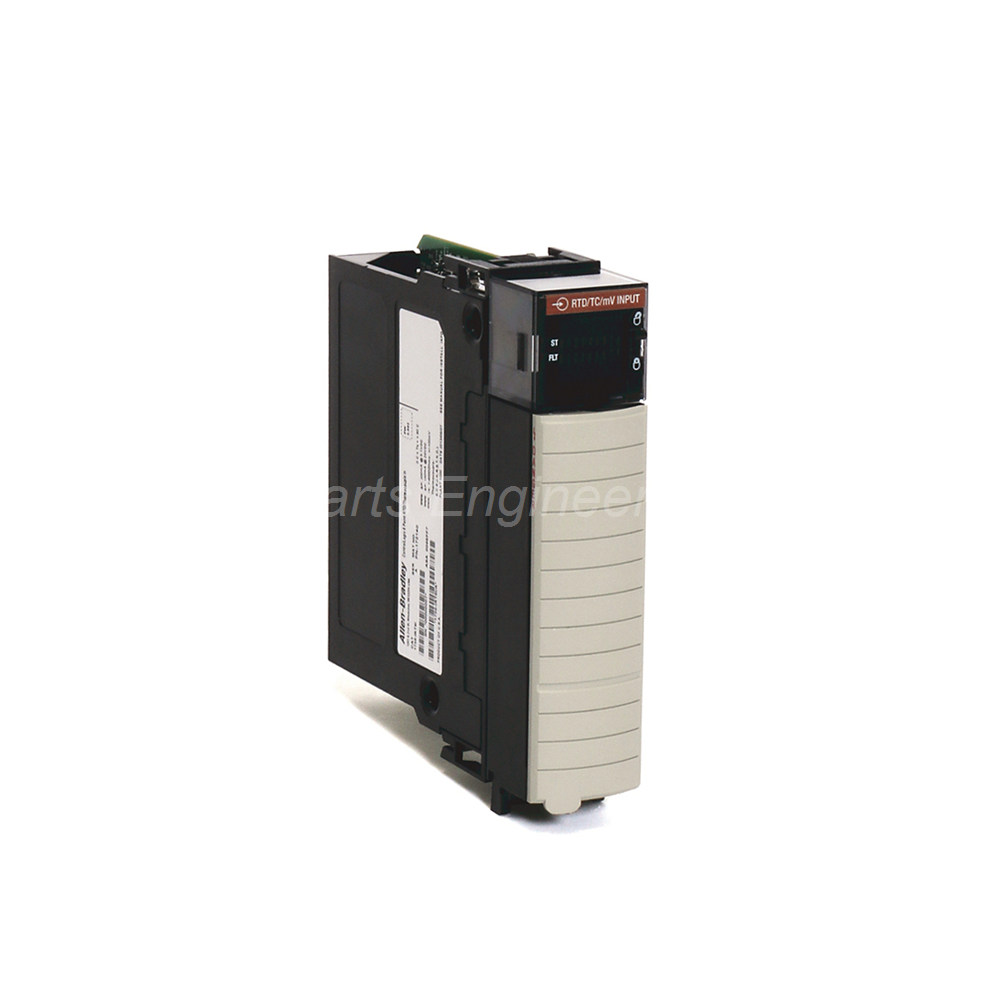
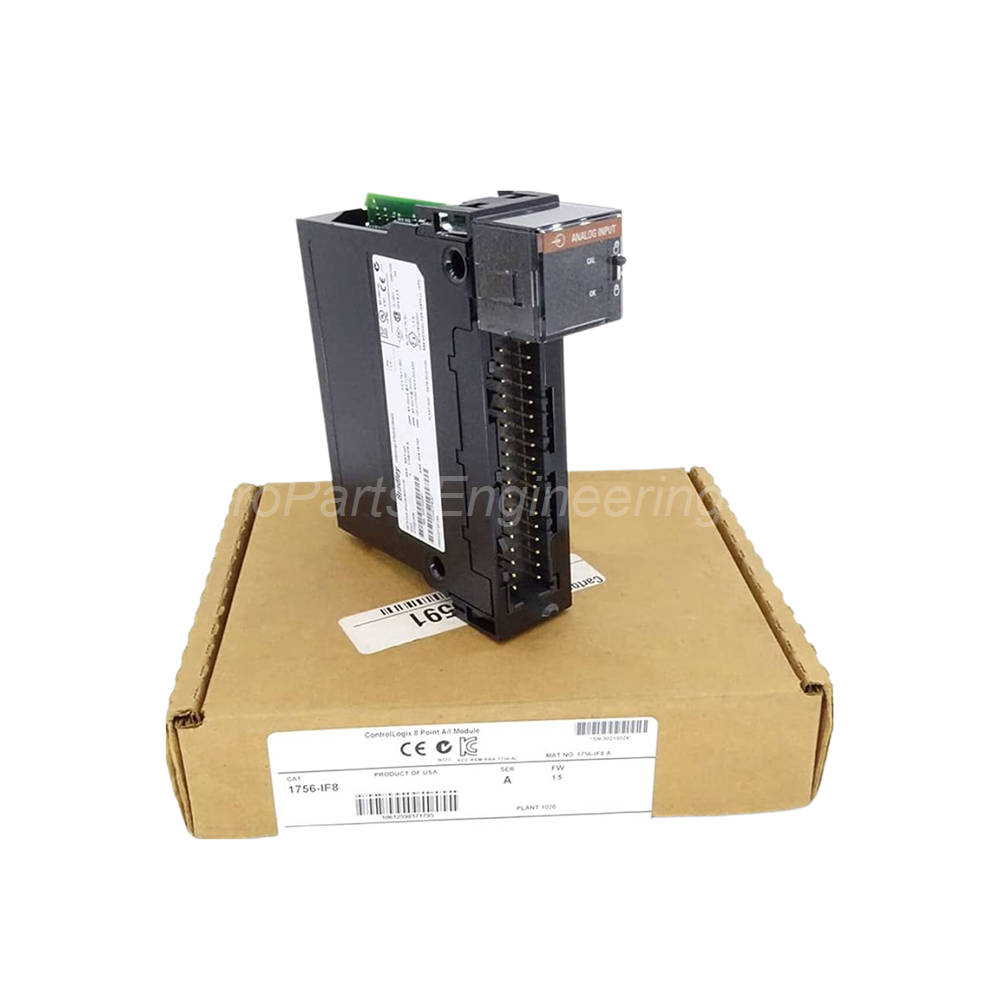
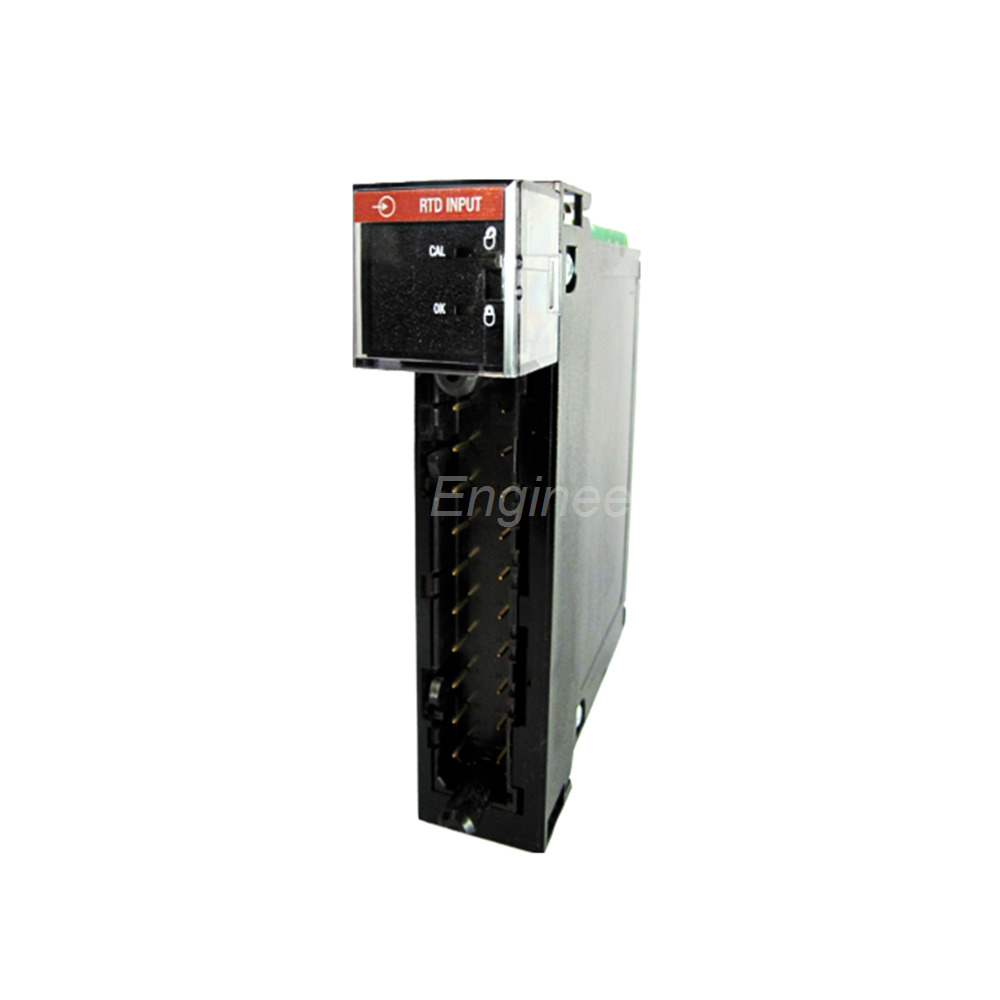
Allen-Bradley 1756-IR6I ControlLogix RTD Input Module 6-Point Isolated
Introduction:
Allen-Bradley 1756-IR6I ControlLogix 6-channel isolated RTD input module, 16-bit resolution, supports Pt/Ni/Cu sensors, 4 input ranges, floating/integer data, diagnostics, RTS multicast. (147 chars)
 Customer Reviews
UBEST Automation – Trusted Global Automation Parts Supplier
We offer a wide range of in-stock industrial automation spare parts. All products come with a 12-month warranty and a 30-day refund for quality issues.
Product Attributes:
Notice: For real-time prices and inventory, please click the button below to contact us.
Product Overview
To begin with, the Allen-Bradley 1756-IR6I is a high-performance isolated RTD input module meticulously engineered for the Rockwell Automation ControlLogix platform. Furthermore, this 6-point module delivers exceptionally precise temperature measurements by seamlessly interfacing with a comprehensive variety of Resistance Temperature Detector (RTD) sensors. In addition, it has been specifically designed for demanding industrial environments, and consequently, the 1756-IR6I offers superior signal integrity through its individually isolated channels. As a result, it ensures reliable data acquisition even in the presence of significant electrical noise and ground-loop interference. Moreover, its advanced on-board data alarming capabilities, together with scalable engineering units, make it an indispensable component for critical process control and monitoring applications. Therefore, for engineers seeking robust temperature input solutions, this module represents a proven and trusted choice.
Technical Specifications
- Number of Inputs: 6 individually isolated RTD/resistor inputs
- Supported Sensor Types (RTD):
- Platinum (alpha=385): 100Ω, 200Ω, 500Ω, 1000Ω
- Platinum (alpha=3916): 100Ω, 200Ω, 500Ω, 1000Ω
- Nickel (alpha=672): 120Ω
- Nickel (alpha=618): 100Ω, 120Ω, 200Ω, 500Ω
- Copper: 10Ω
- Input Ranges (Selectable): 1…487Ω, 2…1000Ω, 4…2000Ω, 8…4000Ω
- Resolution (A/D): 16 bits with per-range bit weights:
- 7.7 mΩ/bit for 1…487Ω range
- 15 mΩ/bit for 2…1000Ω range
- 30 mΩ/bit for 4…2000Ω range
- 60 mΩ/bit for 8…4020Ω range
- Data Formats: IEEE 32-bit floating point or 16-bit integer (left-justified, 2's complement)
- Module Scan Time: 25 ms min (floating point ohms), 50 ms min (floating point temp), 10 ms min (integer ohms)
- Backplane Current Draw: 250 mA @ 5V DC; 125 mA @ 24V DC
- Power Dissipation (Max): 4.3 Watts
- Isolation: Individually isolated channels for superior noise rejection
- Filtering: Notch filter for line noise rejection + digital filter for transient smoothing
- Temperature Units: Software-selectable Celsius or Fahrenheit
- Removable Terminal Block (RTB) Housing: Compatible with 1756-TBNH or 1756-TBSH (ordered separately)
Key Features & Benefits
First of all, this ControlLogix analog module supports real-time channel sampling (RTS) and multicasts data to reduce controller overhead, which significantly improves overall system efficiency. In addition, it includes comprehensive diagnostic capabilities such as under-range/over-range detection, process alarms, rate alarms (floating-point mode only), and wire-off detection to ensure loop integrity. Meanwhile, the 10Ω offset feature specifically compensates for small errors in copper RTD applications, while per-channel sensor linearization translates resistance directly into accurate temperature values. Consequently, users benefit from reduced troubleshooting time and increased process uptime. Furthermore, the module's flexible data formatting options allow seamless integration with both legacy and modern control architectures.
Installation Guidelines
- To ensure safe handling, always verify that chassis power is OFF before inserting or removing the 1756-IR6I module.
- After that, insert the module into any available slot of the ControlLogix chassis (1756-A4, -A7, -A10, -A13, -A17).
- Next, use the correct Removable Terminal Block (RTB) – either 1756-TBNH (standard) or 1756-TBSH (screw-type) – and wire RTD sensors according to 3-wire or 4-wire connection diagrams provided in the user manual.
- Subsequently, configure input range, sensor type, data format, and filter settings via Studio 5000 Logix Designer software.
- Additionally, set the Real-Time Sampling (RTS) and Requested Packet Interval (RPI) periods to optimize network bandwidth and update rates.
- Finally, verify wiring integrity using the module's wire-off detection feature before commissioning the system.
Package Contents
- 1 x Allen-Bradley 1756-IR6I ControlLogix Isolated RTD Input Module (unit only)
- Static-shielded anti-static packaging
Note: Removable Terminal Block (RTB), chassis, and power supply are sold separately. For detailed installation procedures, please refer to the official Rockwell Automation publication 1756-UM009.
Frequently Asked Questions (FAQ)
Q1: What is the difference between the 1756-IR6I and the standard 1756-IR6 module?
A: To clarify, the 1756-IR6I provides individually isolated channels, which offers superior noise immunity and ground-loop protection compared to the non-isolated 1756-IR6. Therefore, this makes the 1756-IR6I ideal for applications with long sensor wiring or varying ground potentials.
Q2: Can this module support 2-wire RTDs?
A: Although the 1756-IR6I is primarily designed for 3-wire and 4-wire RTDs to compensate for lead resistance, 2-wire RTDs can still be used if short leads are involved and accuracy requirements are less critical. However, 3-wire or 4-wire configurations are strongly recommended for optimal precision.
Q3: How do I configure the module for a specific temperature unit?
A: In practice, the temperature unit (Celsius or Fahrenheit) is easily configured through the module's properties in Studio 5000 Logix Designer software under the "Configuration" tab for each individual input channel.
Q4: What does the "rate alarm" function do on the 1756-IR6I?
A: Essentially, the rate alarm detects rapid temperature changes (increase or decrease) within a defined short period. Notably, this feature is active only when the module is operating in floating-point data format and is particularly useful for detecting process upsets or sensor failures.
Q5: Can I use this module for resistance measurement beyond temperature sensing?
A: Yes, indeed. The 1756-IR6I can also be used to measure general resistance signals (e.g., from potentiometers or resistive position sensors) within its configured input ranges. For this purpose, simply use the resistance data format and scale the readings accordingly in your application logic.