
200350-00-00-00 Bently Nevada 200350 Series Vibration Sensor
Introduction:
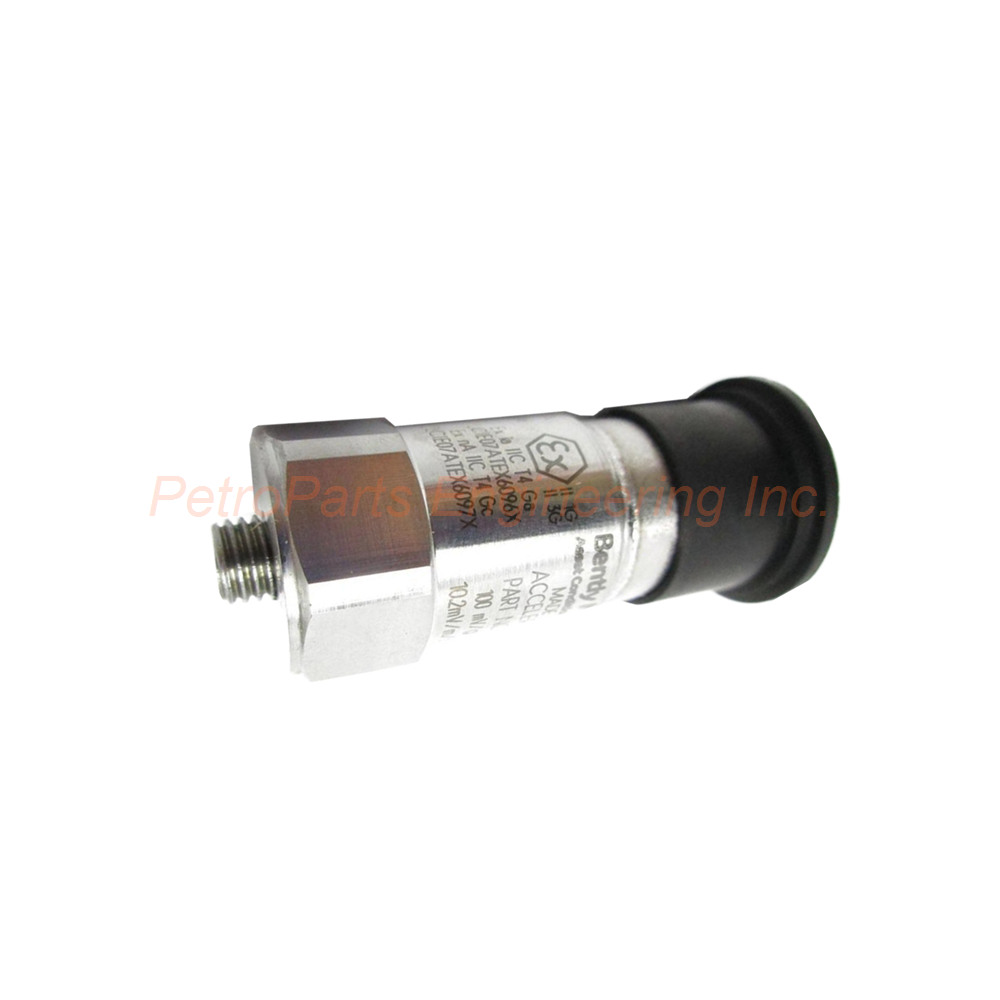
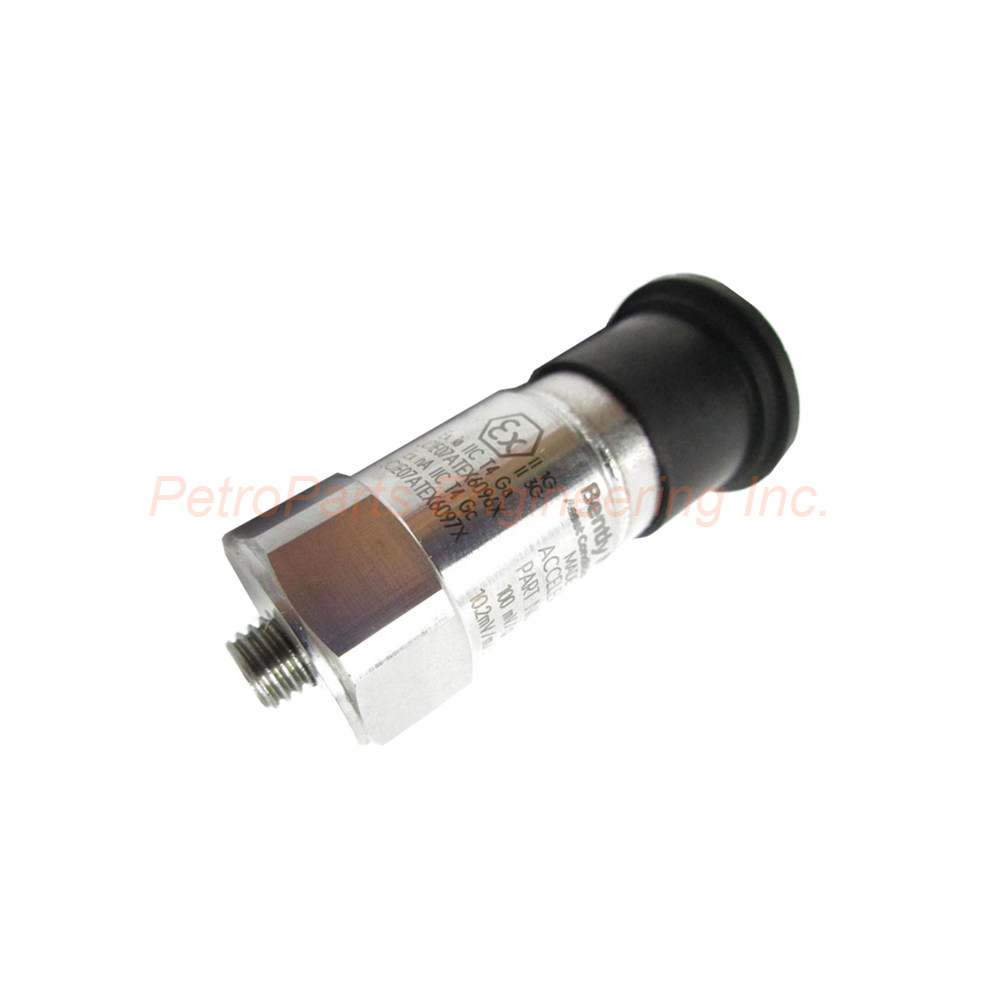
Accelerometer with 100 mV/g sensitivity. Frequency response from 30 to 600,000 cpm. Stainless steel case with IP68 rating.
 Customer Reviews
UBEST Automation – Trusted Global Automation Parts Supplier
We offer a wide range of in-stock industrial automation spare parts. All products come with a 12-month warranty and a 30-day refund for quality issues.
Product Attributes:
Notice: For real-time prices and inventory, please click the button below to contact us.
Product Overview
Sensor Design and Application
The Bently Nevada 200350-00-00-00 is an accelerometer from the 200350 series manufactured in the USA. Therefore, this sensor measures vibration in rotating and reciprocating machinery. The sensing element uses ceramic material in a shear geometry configuration. Consequently, the 200350-00-00-00 provides accurate acceleration measurements across a wide frequency range. The welded hermetic sealing ensures reliable operation in harsh environments.
Key Features and Benefits
The 200350-00-00-00 offers a sensitivity of 100 mV/g with ±20% tolerance. Therefore, it provides standard vibration measurements compatible with most monitoring systems. The frequency range extends from 30 to 600,000 cpm (0.5 to 10,000 Hz). Consequently, the sensor captures both low-frequency machinery vibrations and high-frequency bearing faults. The stainless steel housing provides excellent durability.
Ordering Information and Model Breakdown
The Bently Nevada 200350-00-00-00 follows a specific ordering code structure.
| Code Position | Value | Meaning |
|---|---|---|
| 200350 | Base Model | 200350 Series Accelerometer |
| 00 | Mounting Stud | 1/4-28 SS with brass tip, 0.5 inch |
| 00 | Tolerance | 100 mV/g ±20% |
| 00 | Agency Approvals | No Approvals |
Technical Specifications
General Specifications
Manufacturer: Bently Nevada
Product Number: 200350-00-00-00
Series: 200350 Accelerometers
Product Type: Accelerometer
Country of Origin: Made in U.S.A.
Condition: New and Original
Sensitivity and Measurement Specifications
Sensitivity: 100 mV/g ±20% (10.2 mV/m/s² ±20%)
Measurement Range: ±50g
Transverse Sensitivity: ≤7%
Amplitude Linearity: ±1%
Mounted Resonant Frequency: 1500 kcpm (25 kHz)
Frequency Response Specifications
The 200350-00-00-00 provides wide frequency response for comprehensive vibration monitoring.
| Parameter | Value |
|---|---|
| Frequency Range (±3 dB) | 30 to 600,000 cpm (0.5 to 10,000 Hz) |
| Mounted Resonant Frequency | 1500 kcpm (25 kHz) |
Broadband Electrical Noise
Broadband Electrical Noise (1-10 kHz): 350 µg (3,434 µm/s²)
Output Specifications
Output Bias Voltage: 8 to 12 VDC
Excitation Voltage: 18 to 28 VDC
Constant Current Excitation: 2 to 20 mA
Settling Time: 2.0 seconds (within 1% of bias)
Output Impedance: <150 ohms
Discharge Time Constant: ≥0.3 seconds
Electrical Isolation (Case): >10⁸ ohms
Environmental Specifications
Operating Temperature Range: -65°F to +250°F (-54°C to +121°C)
Shock Survivability: 5,000 g peak
Relative Humidity: 100% relative, condensing, non-submerged
Enclosure Rating: IP68
Sealing: Welded hermetic
Physical Specifications
Weight: 0.051 kg (1.8 oz)
Height: 1.65 inches (4.24 cm)
Hex Size: 11/16 inch (1.8 cm)
Housing Material: Stainless steel
Electrical Connector: 2-Pin Mil-C-5015
Electrical Connection Position: Top
Mounting Thread: 1/4-28 Female
Mounting Stud: 1/4-28 SS with brass tip, 0.5 inch
Mounting Torque (Maximum): 2 to 5 ft-lb (2.7 to 6.8 N-m)
Sensing Element Specifications
Sensing Element Material: Ceramic
Sensing Geometry: Shear
Installation Guide
Follow these steps to install the Bently Nevada 200350-00-00-00 correctly.
Prepare Mounting Surface: First, clean the mounting surface thoroughly.
Install Mounting Stud: Next, thread the stainless steel stud with brass tip into the 1/4-28 female thread.
Hand Tighten Sensor: Then, thread the 200350-00-00-00 onto the mounting stud by hand.
Torque to Specification: After that, tighten to 2 to 5 ft-lb (2.7 to 6.8 N-m) maximum.
Connect Cable: Meanwhile, attach the mating 2-pin Mil-C-5015 connector.
Verify Bias Voltage: Finally, confirm the output bias voltage is between 8 and 12 VDC.
The 200350-00-00-00 requires careful attention to mounting torque. Therefore, do not exceed 5 ft-lb (6.8 N-m). In addition, allow 2 seconds settling time for the bias voltage to stabilize. Consequently, proper installation ensures accurate vibration measurements.
Package List
The package includes the following physical items.
Bently Nevada 200350-00-00-00 accelerometer (1 piece)
1/4-28 SS mounting stud with brass tip, 0.5 inch (installed)
Product label with part number
Factory packing with original labels
Note: Interconnect cables are not included. Mating connectors are sold separately. No calibration certificate is provided with this sensor.
Frequently Asked Questions (FAQ)
1. What is the sensitivity of the 200350-00-00-00?
The Bently Nevada 200350-00-00-00 has a sensitivity of 100 mV/g with ±20% tolerance. Therefore, this standard sensitivity suits most industrial vibration monitoring applications. Consequently, you can connect it directly to standard vibration monitors without additional signal conditioning.
2. What frequency range does the 200350-00-00-00 cover?
The Bently Nevada 200350-00-00-00 covers frequencies from 30 to 600,000 cpm (0.5 to 10,000 Hz). Therefore, the sensor captures both low-speed machinery rotation and high-frequency bearing defects. The mounted resonant frequency reaches 25 kHz. Consequently, this sensor suits a wide variety of machine types.
3. What is the IP rating of the 200350-00-00-00?
The Bently Nevada 200350-00-00-00 has an IP68 enclosure rating. Therefore, the sensor withstands continuous immersion in water under specified conditions. In addition, the welded hermetic sealing protects against humidity up to 100% condensing. Consequently, this sensor suits outdoor and washdown applications.
4. What type of connector does the 200350-00-00-00 use?
The Bently Nevada 200350-00-00-00 uses a 2-pin Mil-C-5015 connector located on the top of the sensor. Therefore, this military-spec connector provides reliable electrical connection in harsh environments. The stainless steel housing ensures corrosion resistance. Consequently, the connector maintains signal integrity over many mating cycles.
5. What is the shock survivability of this accelerometer?
The Bently Nevada 200350-00-00-00 can withstand 5,000 g peak shock. Therefore, the sensor survives accidental impacts and high-vibration events. This rugged design ensures long-term reliability in machinery monitoring applications. Consequently, replacement frequency is significantly reduced.
6. What is the sensing element material and geometry?
The Bently Nevada 200350-00-00-00 uses a ceramic sensing element in a shear geometry configuration. Therefore, this design minimizes base strain and thermal transient sensitivity. The ceramic material provides excellent long-term stability. Consequently, measurement accuracy remains consistent over the sensor's lifetime.
7. Does the 200350-00-00-00 have agency approvals?
No, the Bently Nevada 200350-00-00-00 with option code 00 has no agency approvals. Therefore, this sensor is intended for general purpose industrial use only. For hazardous area installations, select a version with appropriate agency approval options. Consequently, verify your site requirements before ordering this configuration.
Related Accessories
Enhance your vibration monitoring system with these compatible parts.
Interconnect Cable: Bently Nevada 200350 series cable for sensor connection
Mating Connector: 2-pin Mil-C-5015 connector for sensor interface
Mounting Stud Kit: Replacement stainless steel studs with brass tip
Mounting Adapter: Bently Nevada adapter for non-standard mounting surfaces
Protective Cover: Bently Nevada cover for connector protection in dirty environments
Always use genuine Bently Nevada components with the 200350-00-00-00. Therefore, third-party cables may cause signal degradation or connector compatibility issues. In addition, verify the mounting torque does not exceed 5 ft-lb. Consequently, using authentic parts ensures optimal measurement accuracy and sensor reliability.