
Yokogawa AFV10D-S41201 Duplexed Field Control Unit
Introduction:
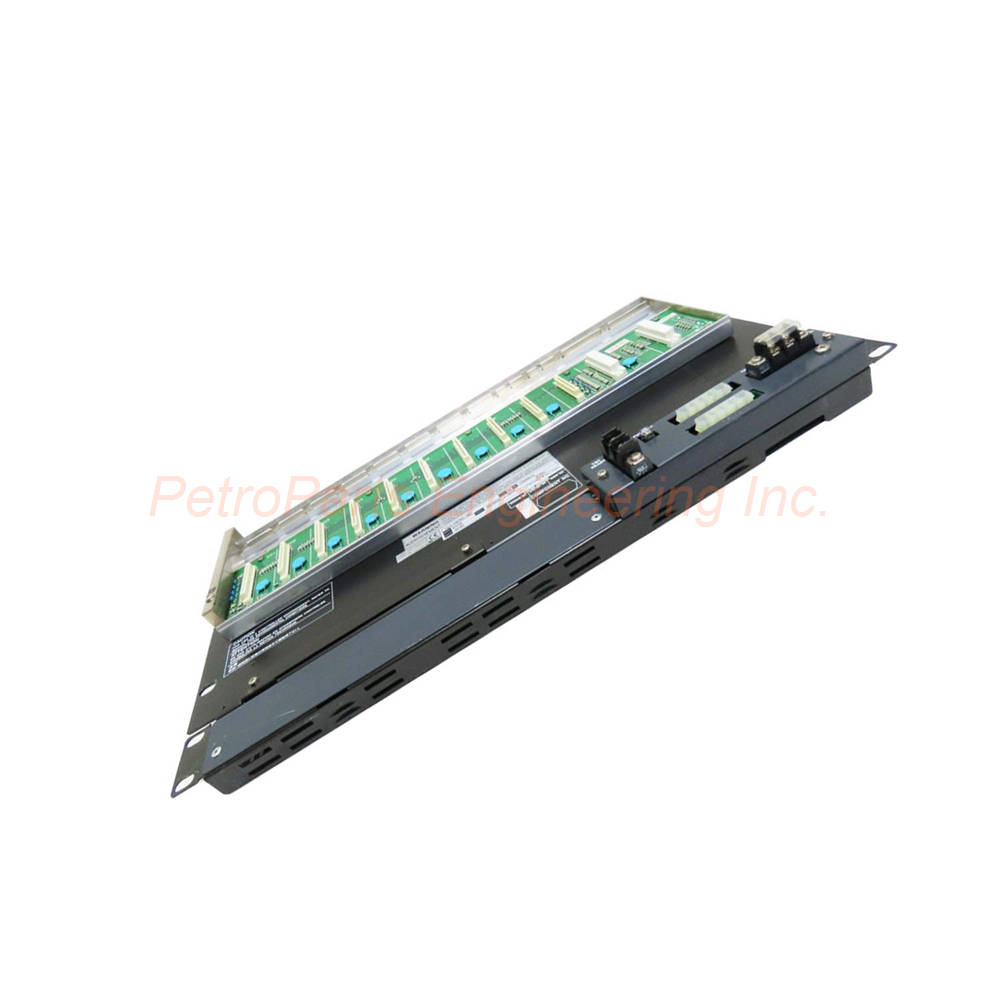
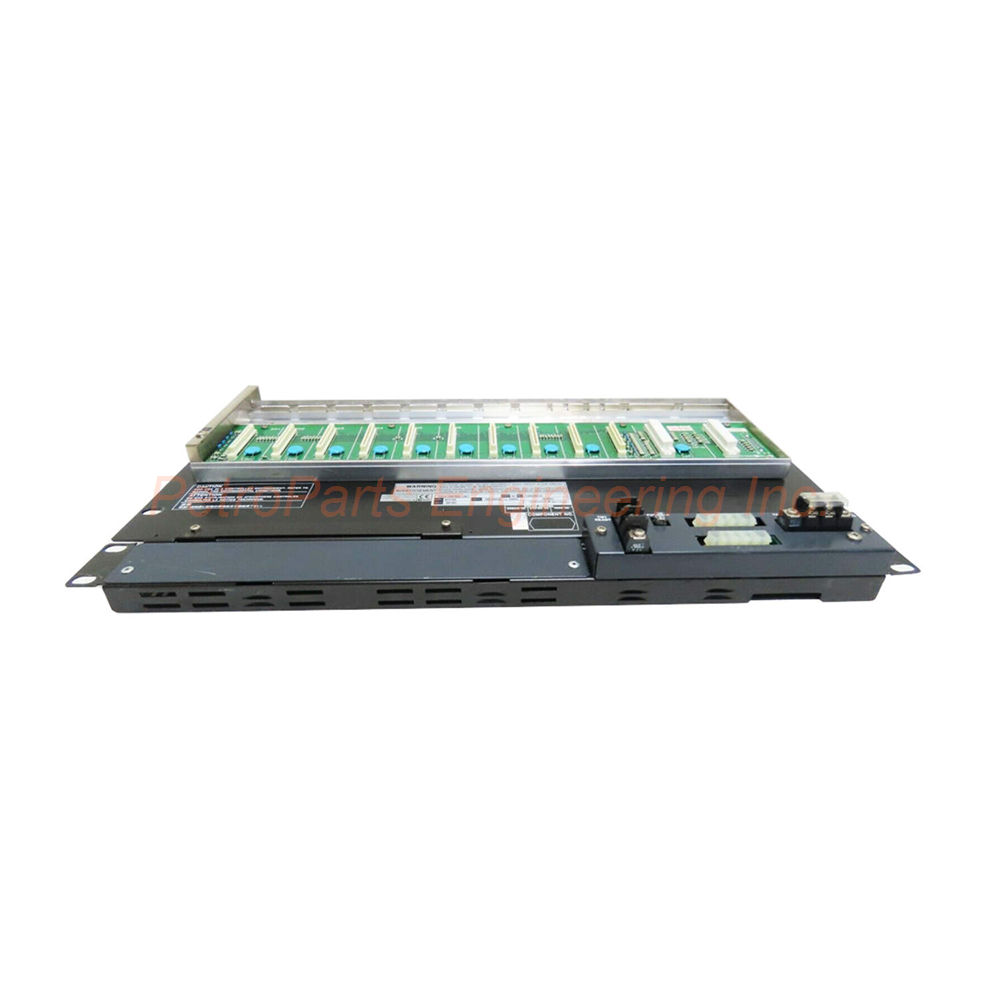
The AFV10D-S41201 is a duplexed field control unit from Yokogawa. It features dual-redundant Vnet/IP, dual power supplies, and 19-inch rack mounting for CENTUM VP systems.
 Customer Reviews
UBEST Automation – Trusted Global Automation Parts Supplier
We offer a wide range of in-stock industrial automation spare parts. All products come with a 12-month warranty and a 30-day refund for quality issues.
Product Attributes:
Notice: For real-time prices and inventory, please click the button below to contact us.
Product Overview
The Yokogawa AFV10D-S41201 is a duplexed field control unit (FCU). This unit is designed for the CENTUM VP integrated production control system. It supports Vnet/IP and FIO architectures.
The FCU is 19-inch rack mountable. Furthermore, it features dual-redundant Vnet/IP communication and dual-redundant power supplies. Therefore, it provides high availability for critical process control applications.
Ordering Information Breakdown
The AFV10D-S41201 follows a specific suffix code structure. Understanding these codes helps verify correct configuration.
AFV10D: Duplexed Field Control Unit base model.
S: Standard type.
4: Dual-redundant Vnet/IP, dual-redundant power supply.
1: 100-120 V AC power supply.
2: 220-240 V AC power supply (second voltage range).
0: Basic type.
1: LFS1500 Control Function for Field Control Station (for Vnet/IP and FIO).
General Specifications
The AFV10D-S41201 offers robust control capabilities for CENTUM VP systems.
Manufacturer: Yokogawa.
Product Type: Duplexed Field Control Unit.
For: Vnet/IP and FIO.
Mounting: 19-inch rack mountable.
Weight: 8 kg (approx.).
Main Memory Capacity: 32 Mbyte.
Processor: VR5432 (133 MHz).
Memory and Battery Backup
The AFV10D-S41201 protects data during power failures.
Memory Protection During Power Failure: Battery-backed.
Battery Back-up for Main Memory: Max. 72 hours.
Battery Recharge Time: Min. 48 hours.
FCU Status Contact Output
The AFV10D-S41201 provides external fault indication.
Contact Points: 2 terminals (NC, C).
Operation: Contact points open during FCU failure.
Contact Rating: 30 V DC, max. 0.3 A.
Communication Interface
The AFV10D-S41201 uses high-speed redundant networking.
Vnet/IP Interface: Dual-redundant.
Network Connection: Connect UTP cable (CAT5e or better) to Layer 2 switch.
Reference Document: Integrated Production Control System CENTUM VP System Overview (Vnet/IP Edition) (GS 33K01A10-50E).
Node Units Connectable
The AFV10D-S41201 supports extensive I/O expansion.
Maximum Number of Node Units per FCU: 14.
Combination Limit: ESB Bus Node Units plus ER Bus Node Units total 14 or less.
ESB Bus Node Units Maximum: 9 or less.
Note: LFS1500 allows up to 3 nodes. Consequently, expansion to 14 nodes requires the LFS1550 Application Capacity Expansion Package (for AFV10D).
License Requirement: To connect a node unit to the FCU, a Node Unit Expansion License (Option code: /NDEL) is required.
Module Configuration
The AFV10D-S41201 supports flexible module arrangements.
Power Supply Module:
Models: PW481, PW482, or PW484.
Dual-Redundant Configuration: Two modules required.
Processor Module:
Model: CP451.
Dual-Redundant Configuration: Two modules required.
I/O Modules:
Maximum: 8 (non-standard components).
ESB Bus Node Units Connection
The AFV10D-S41201 connects to ESB Bus Node Units via EC401.
Required Module: ESB Bus Coupler Module (EC401).
Installation Slots: Slot 7 and slot 8.
Dual-Redundant Processor Configuration: EC401 must be installed in both slot 7 and slot 8.
Single Processor Configuration: EC401 in slot 7 only; keep slot 8 empty.
ER Bus Node Units Connection
The AFV10D-S41201 connects to ER Bus Node Units via EB401.
Required Module: ER Bus Interface Master Module (EB401).
Single Configuration: Install EB401 in an odd-numbered slot.
Empty Slot Requirement: Keep the right side of the installed EB401 empty.
Reference Document: "ER Bus Interface Master Module (for FIO)" (GS 33K50F40-50E).
Power Supply Specifications
The AFV10D-S41201 accepts multiple power sources.
| Power Supply Type | Voltage | Frequency | Consumption |
|---|---|---|---|
| AC (Suffix Code 1-2) | 100-120 V AC | 50/60 Hz | 200 VA |
| AC (Suffix Code 2-2) | 220-240 V AC | 50/60 Hz | 230 VA |
| DC (Option) | 24 V DC | N/A | 5.5 A |
Note: Specify with suffix codes when ordering.
Mounting and Connections
The AFV10D-S41201 installs in standard 19-inch racks.
Mounting:
19-inch rack mounting.
8 x M5 screws with insulation bush (accessory).
Terminal Connections:
Power Supply: M4 screw terminal connection.
Grounding: M4 screw terminal connection.
Contact Output: M4 screw terminal connection.
Key Features
The AFV10D-S41201 offers several advantages for process control applications.
Dual-Redundant Architecture:
The unit features dual-redundant Vnet/IP and dual-redundant power supplies. Consequently, system availability is maximized for critical processes.
Hot-Swappable Modules:
Processor and power supply modules can be replaced without shutting down the system. Therefore, maintenance does not interrupt production.
Battery-Backed Memory:
Main memory is protected for up to 72 hours during power failure. Hence, process data and programs are not lost.
ESB and ER Bus Support:
Connects to both ESB and ER bus node units. Thus, it supports a wide range of I/O modules.
Fault Contact Output:
Provides a dry contact that opens during FCU failure. As a result, external alarm systems can be triggered.
19-Inch Rack Mountable:
Standard form factor fits into existing industrial racks. Consequently, integration into new or existing systems is straightforward.
LFS1500 Control Function:
Includes LFS1500 for Field Control Station operation. Therefore, it is ready for advanced process control strategies.
Typical Applications
The AFV10D-S41201 suits various process control applications.
Oil and gas refinery control systems.
Chemical and petrochemical plant automation.
Power generation plant control.
Pharmaceutical manufacturing.
Water and wastewater treatment facilities.
Installation Guidelines
Install the AFV10D-S41201 in a 19-inch rack using 8 x M5 screws. Use the supplied insulation bush accessories. Ensure the rack is properly grounded.
For dual-redundant configuration, install two processor modules (CP451) and two power supply modules (PW481, PW482, or PW484). Install EC401 modules in both slot 7 and slot 8 for ESB bus communication. For ER bus, install EB401 in an odd-numbered slot.
Connect the power supply using M4 screw terminals. For 100-120 V AC, the consumption is 200 VA. For 220-240 V AC, consumption is 230 VA. Connect the Vnet/IP network using CAT5e or better UTP cable to a Layer 2 switch.
The FCU status contact output provides NC/C contacts. These contacts open during FCU failure. Connect these to an external alarm system.
What is in the Box
Please inspect all items upon delivery.
Yokogawa AFV10D-S41201 duplexed field control unit.
Processor modules (2 x CP451 for dual-redundant configuration).
Power supply modules (2 x as per suffix code).
Insulation bush accessories for 19-inch rack mounting.
Installation instruction manual.
Frequently Asked Questions (FAQ)
1. How many node units can be connected to the AFV10D-S41201?
The AFV10D-S41201 supports a maximum of 14 node units per FCU. The total includes both ESB Bus Node Units and ER Bus Node Units. However, ESB Bus Node Units are limited to 9 or fewer.
2. What is the main memory capacity of this FCU?
The AFV10D-S41201 has a main memory capacity of 32 Mbyte. A battery backs up this memory for up to 72 hours during power failure.
3. What is the difference between single and dual-redundant configuration?
In single configuration, one processor module and one power supply are used. In dual-redundant configuration, two processor modules and two power supplies are used. Therefore, the AFV10D-S41201 continues operating if one module fails.
4. What are the power supply options for this unit?
The AFV10D-S41201 accepts 100-120 V AC, 220-240 V AC, or 24 V DC. The specific voltage is determined by suffix codes when ordering.
5. How does the FCU indicate a failure to external systems?
The AFV10D-S41201 provides a status contact output with NC/C terminals. These contacts open during FCU failure. Consequently, external alarm systems can be triggered.