
Bently Nevada 200150-08-05 Accelerometer 100mV/g CSA ATEX
Introduction:
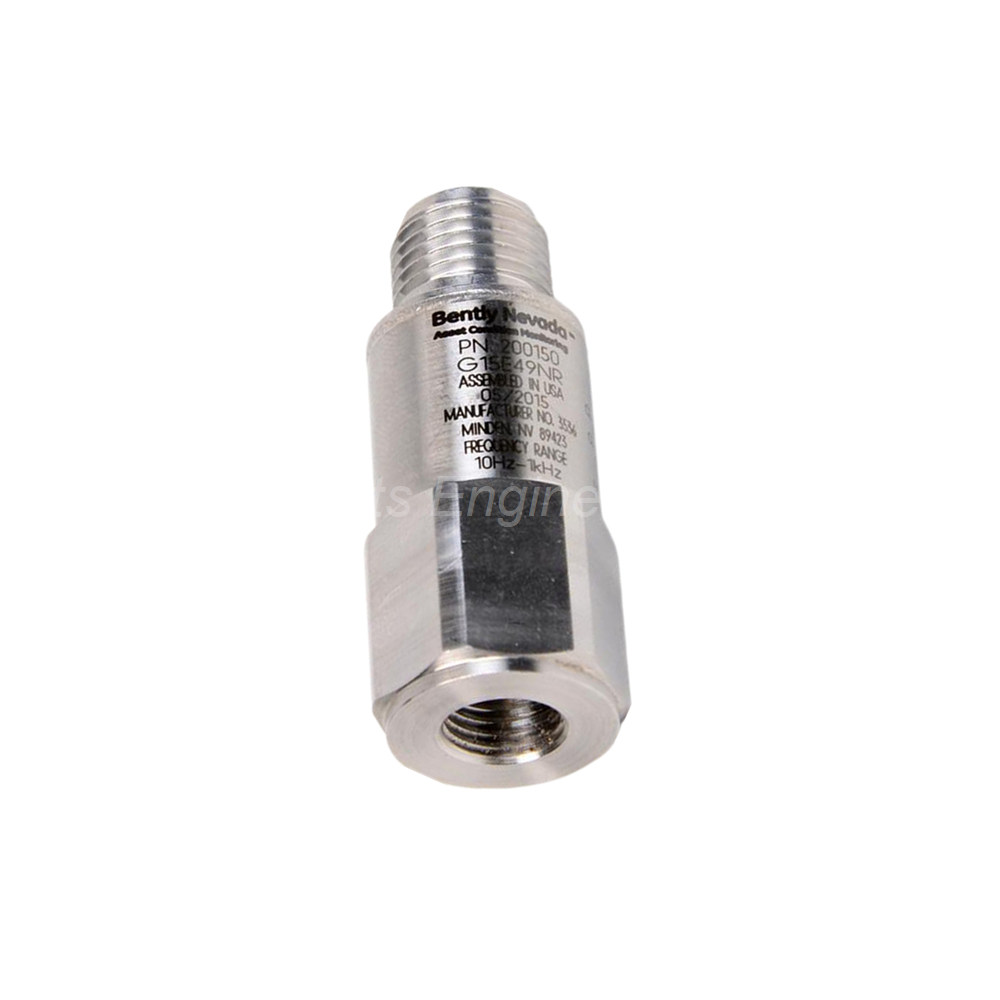
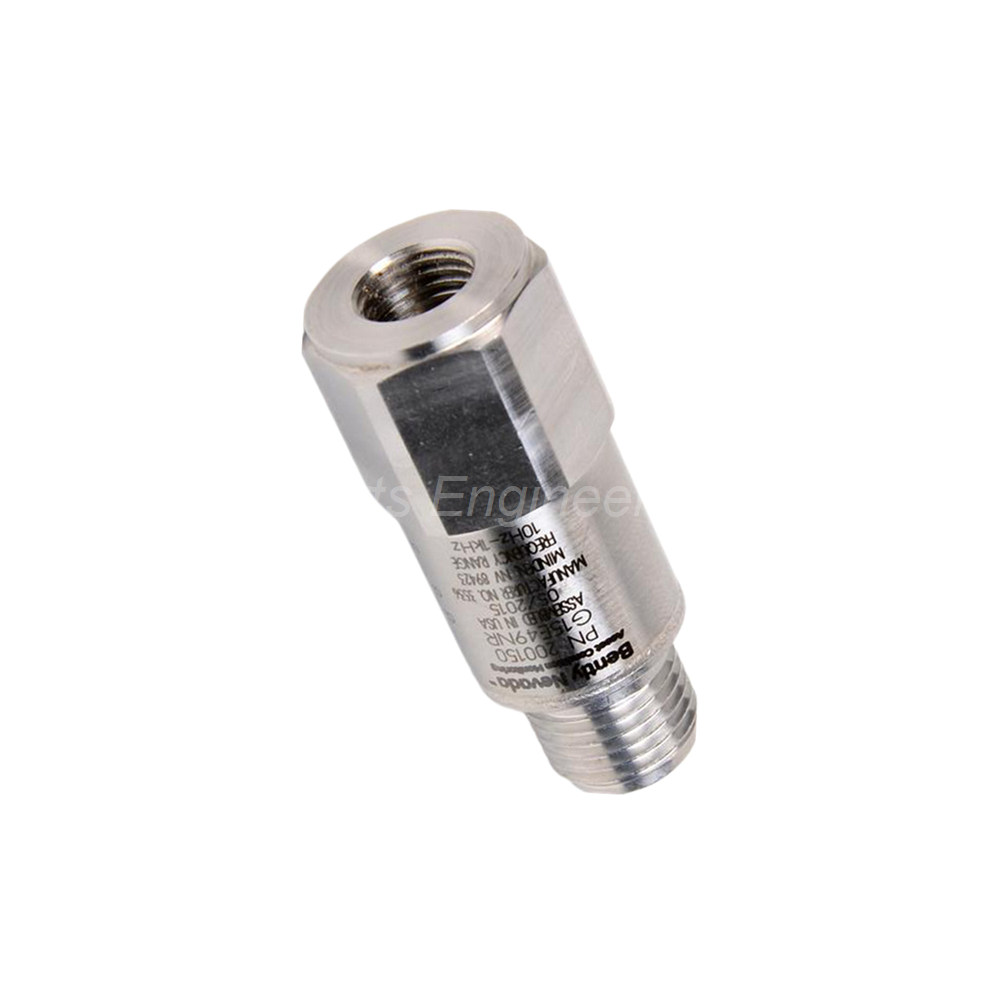
The Bently Nevada 200150-08-05 is a general purpose accelerometer for Trendmaster 2000 or Pro systems. It offers 100 mV/g sensitivity and ±245g measurement range. This unit has multiple approvals including CSA, ATEX, and IECEx.
 Customer Reviews
UBEST Automation – Trusted Global Automation Parts Supplier
We offer a wide range of in-stock industrial automation spare parts. All products come with a 12-month warranty and a 30-day refund for quality issues.
Product Attributes:
Notice: For real-time prices and inventory, please click the button below to contact us.
Bently Nevada 200150-08-05 General Purpose Accelerometer
Product Overview
The Bently Nevada 200150-08-05 is a general purpose accelerometer. It works with Trendmaster 2000 or Trendmaster Pro systems. This unit is made in the U.S.A. The 200150-08-05 suits standard acceleration-to-velocity channel types. You can use it for general vibration monitoring applications.
This model includes specific ordering options. The -08 option provides a 3/8-24 to 1/2 NPT mounting stud. The stud has a 1 inch hex shape. The -05 option gives multiple approvals. These include CSA, ATEX, and IECEx certifications. The Bently Nevada 200150-08-05 meets global safety standards.
Electrical Specifications
The 200150-08-05 delivers stable electrical performance. All specifications are at +25°C (+77°F). Below are the complete electrical parameters.
Sensitivity @ 80 Hz: 10.2 mV/(m/s²) or 100 mV/g (±12%)
Measurement Range: ±245 m/s² (±25 g)
Frequency Range (referenced to 80 Hz, ±10%): 10 to 1000 Hz (600 to 60,000 cpm)
Mounted Resonant Frequency: >20 kHz (>1200 kcpm)
Amplitude Linearity (1 to 10g pk): ±2%
Transverse Sensitivity: ≤7%
Settling Time (within 5% of bias): ≤300 ms
Excitation Voltage: 4.7 to 5.5 Vdc
Quiescent Current: <800 µA
Output Bias Voltage: +2.5 ± 0.23 Vdc
Polarity: SIG+ positive with respect to SIG- (acceleration from base to connector)
Environmental Specifications
The Bently Nevada 200150-08-05 handles harsh conditions. It operates in a wide temperature range. Below are the environmental parameters.
Axial Shock Limit: 49,050 m/s² pk (5,000 g pk)
Operating Temperature Range: -40°C to +105°C (-40°F to +221°F)
Sealing (Hermetic): 5x10⁻⁸ atm•cc/s (3.1x10⁻⁹ atm•in³/s) maximum
Relative Humidity: 100% relative, condensing, non-submerged
Physical Specifications
The 200150-08-05 has a compact and rugged design. It uses high-quality materials for durability. Below are the physical parameters.
Size (Hex x Height): 17.5 mm x 45.7 mm (11/16 in x 1.8 in)
Weight: 58 g (2.0 oz) typical
Mounting Thread: 3/8-24 female
Mounting Torque: 2.7 to 6.8 N•m (2 to 5 ft•lbf)
Sensing Element: Ceramic
Sensing Geometry: Shear
Housing and Connector Material: 316L stainless steel
Mounting Stud Option (-08)
The -08 option adds a specific mounting stud. This stud converts 3/8-24 female thread to 1/2 NPT. The stud has a 1 inch hex shape for easy tool access. You can install the Bently Nevada 200150-08-05 securely using this stud. Proper mounting torque is 2.7 to 6.8 N•m. Do not exceed the maximum torque value.
Approvals Option (-05)
The -05 option provides multiple approvals for the 200150-08-05. These include CSA, ATEX, and IECEx certifications. This allows global installation in hazardous areas. Always check local regulations before installation. The Bently Nevada 200150-08-05 meets strict safety standards. These approvals cover explosive atmosphere protection.
Frequency Response Characteristics
The 200150-08-05 has a wide frequency range. It operates from 10 Hz to 1000 Hz within ±10% reference. The mounted resonant frequency exceeds 20 kHz. This high resonance avoids measurement errors near machine running speeds. Amplitude linearity stays within ±2% for most applications. Transverse sensitivity is only 7% maximum.
Sensing Element and Geometry
This accelerometer uses a ceramic sensing element. Ceramic provides stable and repeatable measurements. The sensing geometry is shear type. Shear design reduces base strain sensitivity. It also minimizes thermal transient errors. The Bently Nevada 200150-08-05 delivers accurate data in variable conditions.
Installation Guidance
Follow these steps to install the 200150-08-05 correctly.
Prepare Mounting Surface: Clean and flatten the mounting area.
Apply Thread Lubricant: Use a light oil on the stud threads.
Install Mounting Stud: Screw the -08 stud into the accelerometer.
Mount to Machine: Torque the 200150-08-05 to 2.7-6.8 N•m.
Connect Cable: Attach a compatible Bently Nevada cable.
Apply Excitation: Power the unit with 4.7 to 5.5 Vdc.
Verify Bias Voltage: Check output is +2.5 ± 0.23 Vdc.
Do not use impact tools on the Bently Nevada 200150-08-05. Keep the connector clean before cable attachment. Allow 300 ms settling time before taking measurements.
Package Contents
One Bently Nevada 200150-08-05 accelerometer unit
One 3/8-24 to 1/2 NPT mounting stud (1 inch hex, -08 option)
One product identification label
One hermetically sealed sensor assembly
One anti-static protective bag
Frequently Asked Questions (FAQ)
Q1: Can the 200150-08-05 be used in explosive atmospheres?
A1: Yes, the Bently Nevada 200150-08-05 has -05 multiple approvals. This includes CSA, ATEX, and IECEx for hazardous areas. Check your specific zone requirements before installation.
Q2: What is the difference between 200150 and 200151 cables?
A2: The 200150-08-05 is the accelerometer sensor itself. The 200151 is a separate interface cable. You need both for a complete measurement path.
Q3: How do I verify if my -05 approval is still valid?
A3: Check the label on the Bently Nevada 200150-08-05 housing. Valid approvals are printed directly on the unit. Contact Bently Nevada for certificate copies.
Q4: Can I use this accelerometer underwater?
A4: No, the 200150-08-05 is rated for condensing humidity only. It is not submersible. The IP rating does not support continuous underwater use.
Q5: What happens if I exceed the 245g measurement range?
A5: Exceeding ±245g may saturate the Bently Nevada 200150-08-05 output. Short overloads usually do not damage the sensor. Repeated high-g shocks may degrade ceramic element performance.