
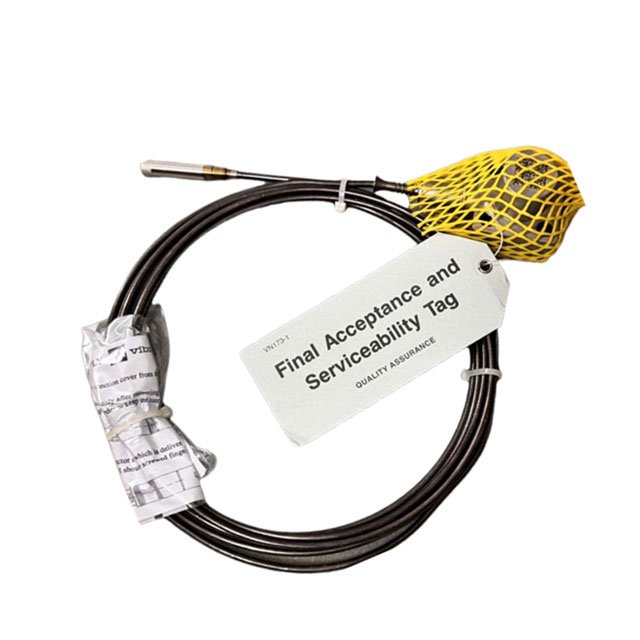
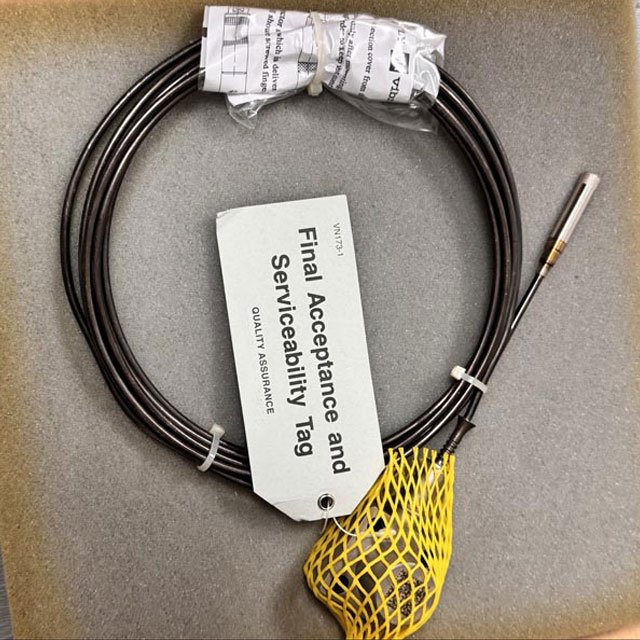
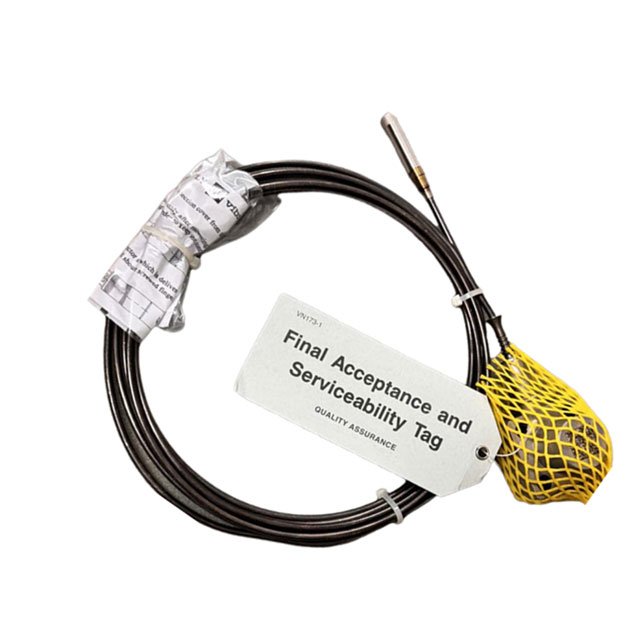
Vibro-Meter CA901 Piezoelectric Accelerometer | 144-901-000-252 (8m Cable)
Introduction:
Vibro-Meter CA901 (144-901-000-252): Extreme temp (-196 to +700°C) piezoelectric accelerometer for loose part monitoring. SIL/ATEX certified.
 Customer Reviews
UBEST Automation – Trusted Global Automation Parts Supplier
We offer a wide range of in-stock industrial automation spare parts. All products come with a 12-month warranty and a 30-day refund for quality issues.
Product Attributes:
Notice: For real-time prices and inventory, please click the button below to contact us.
Engineering Excellence for Extreme Environments
The Vibro-Meter CA901 (Part Number: 144-901-000-252) stands as one of the most resilient piezoelectric accelerometers in the industrial world. Vibro-Meter (a Meggitt brand) specifically engineered this sensor to withstand conditions that would destroy standard vibration equipment. It excels in high-temperature applications, particularly within the nuclear power industry and heavy-duty gas turbine monitoring.
The CA901 serves as a primary tool for Loose Part Monitoring (LPM) systems. These systems detect structural anomalies or detached components within reactor pressure vessels or steam generators. Because it meets stringent nuclear standards such as NRC Guide 1.133 and IEEE 323-1974, engineers trust the CA901 for the most critical safety-related installations. Its ability to operate in temperatures ranging from cryogenic levels (-196°C) up to a blistering +700°C makes it a unique asset for specialized research and high-heat industrial processes.
Technical Specifications and Performance Data
The CA901 utilizes a charge-output design, meaning it requires no external input power but generates a signal that a remote charge converter must process. The version 144-901-000-252 includes an integrated 8-meter cable with a VM Lemo connector.
| Feature | Specification |
|---|---|
| Manufacturer | Vibro-Meter (Meggitt / TPC) |
| Part Number | 144-901-000-252 |
| Sensor Type | Piezoelectric Accelerometer (Charge Output) |
| Sensitivity (at 120 Hz) | 10 pC/g ±5% |
| Operational Temperature | -196°C to +700°C (-320°F to +1292°F) |
| Frequency Response | 3 Hz to 2,800 Hz (±5%) |
| Resonance Frequency | >17 kHz (Mounted) |
| Dynamic Measuring Range | 0.001 g to 200 g peak |
| Material | Inconel 600 (Hermetically Welded) |
| Cable Length | 8 Meters (Suffix -52) |
| Hazardous Area Rating | ATEX II 1 G (Ex ia IIC T6 to T710) |
| Radiation Resistance | Gamma flux 10¹¹ erg/g; Neutron flux 10¹⁸ n/cm² |
Advanced Material Science: Inconel 600 Construction
Vibro-Meter constructs the CA901 housing from Inconel 600, a nickel-chromium alloy renowned for its resistance to oxidation and corrosion across a wide temperature spectrum. The hermetically welded design ensures that moisture, high-pressure steam (up to 140 bar), and corrosive gases cannot penetrate the internal piezoelectric element.
The sensor also features integral case insulation. This design prevents ground loops and electrical interference from affecting the vibration signal, which is critical when measuring low-amplitude signals in electrically noisy power plant environments. The 2-pole system remains completely insulated from the casing, providing a clean charge output for high-precision analysis.
Nuclear Qualification and Reliability
Reliability is the core requirement for any component used in nuclear safety. The CA901 complies with DIN 25.475.1 and undergoes rigorous testing to ensure it survives high radiation doses. It withstands a Gamma flux of up to 10¹¹ erg/g and a Neutron flux of 10¹⁸ n/cm² without any degradation in performance.
Beyond its nuclear pedigree, the CA901 carries ATEX and LCIE certifications for use in potentially explosive atmospheres (Zones 0, 1, and 2). This makes it the ideal choice for monitoring exhaust bearings in large gas turbines or chemical reactors where explosive vapors might coexist with extreme thermal energy.
Installation and Maintenance Guidelines
For optimal performance, technicians must follow precise installation protocols. The CA901 mounts via four M6 Allen screws located inside a protective tube or housing. Proper signal transmission depends on the following factors:
- Fastening Torque: Technicians must apply exactly 15 Nm of torque to the mounting screws to ensure the resonance frequency remains above 17 kHz.
- Cable Management: The 8-meter integrated cable (Part suffix -52) requires careful routing to avoid sharp bends or mechanical abrasion.
- Charge Conversion: Because this is a high-impedance charge-output sensor, you must connect it to a compatible charge converter (such as the Vibro-Meter IPC704) before the signal enters a monitoring rack like the VM600.
Maintenance requirements are minimal due to the sensor’s solid-state construction. However, periodic calibration checks ensure the 10 pC/g sensitivity remains within the ±5% tolerance, especially after exposure to extreme thermal cycles or high-G shock events (up to 500 g spikes).
About Ubest
Ubest Automation is a leading global provider of automation products, with deep partnerships with major automation manufacturers to provide customers with customized business solutions, cost-effective products, and comprehensive services.
Product Center
Contact Us
Phone:+86 180 3000 5825
Address:Room 7A, No. 59 Hubin North Road, Siming District Xiamen City China
Email: sales@ubestplc.com
Contact: Klaus
Scan the QR code