
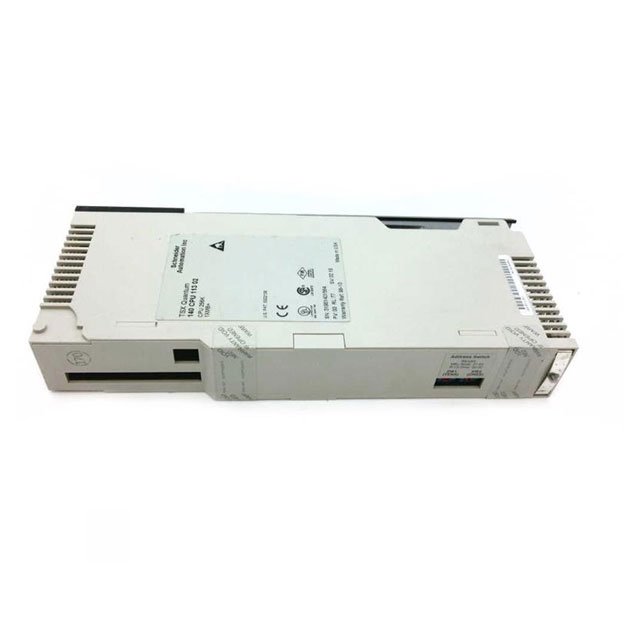
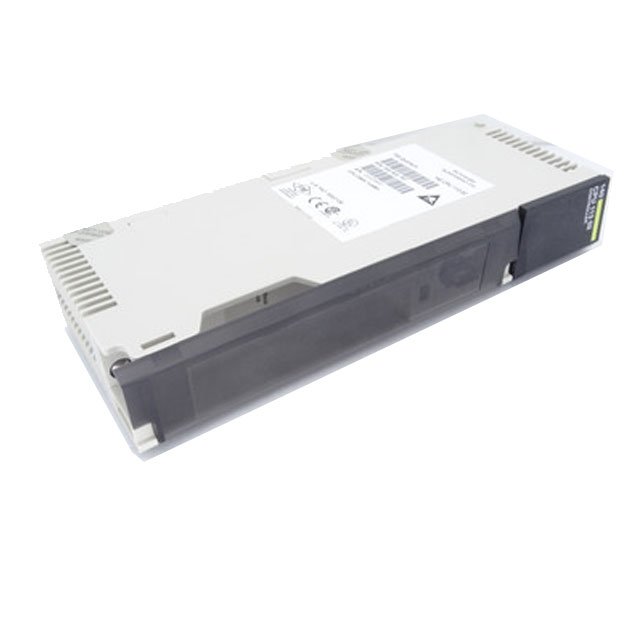
Schneider Electric 140CPU11302: High-Reliability Modicon Quantum 80186 Processor
Introduction:
Schneider Electric 140CPU11302: Modicon Quantum 80186 processor with 109kB RAM, Modbus RS232, and Modbus Plus for reliable industrial control.
 Customer Reviews
UBEST Automation – Trusted Global Automation Parts Supplier
We offer a wide range of in-stock industrial automation spare parts. All products come with a 12-month warranty and a 30-day refund for quality issues.
Product Attributes:
Notice: For real-time prices and inventory, please click the button below to contact us.
The Foundation of Modicon Quantum Automation
The Schneider Electric 140CPU11302 is a high-performance processor module belonging to the legendary Modicon Quantum automation platform. For decades, the Quantum series has set the standard for reliability in large-scale industrial applications, including water treatment, oil and gas, and power generation. This specific processor utilizes the proven 80186 architecture to deliver deterministic control and seamless communication across complex networks.
As a core component of the Quantum rack, the 140CPU11302 manages all logic execution and I/O traffic. It provides a stable bridge between legacy systems and modern industrial requirements. Engineers value this module for its longevity and its ability to maintain consistent performance in harsh electrical environments. Whether you are maintaining an existing installation or integrating a robust controller into a new process, the 140CPU11302 offers the stability your facility requires.
Core Technical Specifications
The 140CPU11302 combines efficient processing power with versatile networking options. The following table highlights the essential technical parameters:
| Feature | Specification |
|---|---|
| Processor Name | Intel 80186 |
| Clock Frequency | 20 MHz |
| Internal RAM | 109 kB |
| Communication Ports | 1 x Modbus RS232, 1 x Modbus Plus |
| Execution Time | 0.3 to 1.4 ms per 1K instructions (LL984) |
| Local I/O Capacity | 64 Input / 64 Output words (Maximum) |
| Remote I/O Capacity | 64 Input / 64 Output words |
| Distributed I/O Capacity | 30 Input / 32 Output words |
| Bus Current Requirement | 780 mA |
| Battery Type | 1.2 Ah Lithium (10-year life) |
| Software Support | Concept, ProWORX 32 |
Deterministic Processing and Performance
At the heart of the 140CPU11302 lies the 80186 microprocessor running at a 20 MHz clock frequency. In the world of Programmable Logic Controllers (PLCs), deterministic execution is more critical than raw gigahertz speed. This processor ensures that every logic scan occurs within a predictable timeframe, typically ranging from 0.3 to 1.4 milliseconds per thousand instructions.
The module features 109 kB of internal RAM, which provides sufficient space for complex user logic and data registers. A built-in watchdog timer (250 ms) continuously monitors the processor’s health. If the system detects a logic hang or hardware failure, it safely halts operations to prevent machine damage or safety hazards. This level of internal monitoring makes the Quantum platform a trusted choice for critical infrastructure.
Dual Communication Protocols: Modbus and Modbus Plus
Connectivity defines the utility of the 140CPU11302. Schneider Electric equipped this module with two distinct communication interfaces to handle different networking needs:
- Modbus RS232 Port: This port primarily facilitates local communication. Technicians use it to connect programming laptops, local Human Machine Interfaces (HMIs), or serial devices like barcode scanners and printers.
- Modbus Plus Port: This is a high-speed, peer-to-peer network interface. Modbus Plus allows the 140CPU11302 to share data with other Quantum controllers, global data registers, and distributed I/O drops at high speeds. It supports up to 63 distributed drops per network, making it ideal for large-scale plant synchronization.
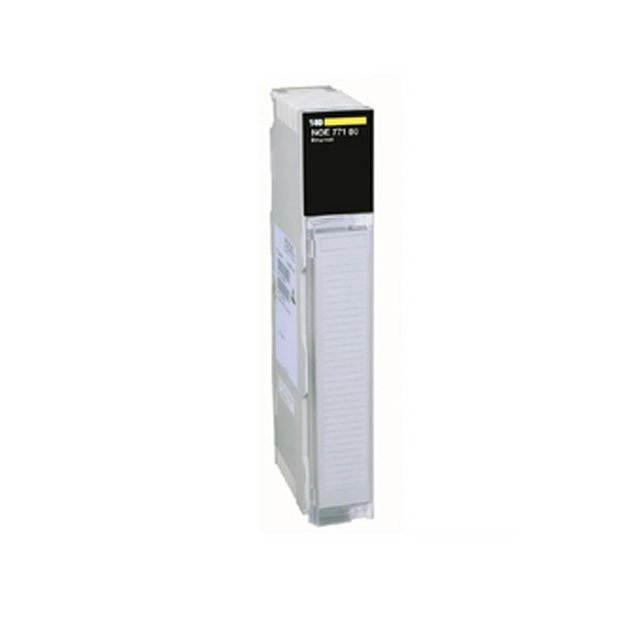
Furthermore, the processor can manage up to two additional communication modules (such as NOM, NOE, or CR modules). This expandability allows the system to integrate into Ethernet/IP or Fiber Optic networks as your plant’s infrastructure evolves.
Comprehensive I/O Management
The 140CPU11302 excels at managing high-density I/O configurations. It supports three distinct I/O architectures:
- Local I/O: The CPU manages modules residing in the same physical rack, supporting up to 64 input and 64 output words.
- Remote I/O: Using dedicated drop adapters, the processor controls I/O racks located at significant distances from the main CPU, supporting up to 31 remote drops.
- Distributed I/O: For smaller, localized sensor clusters, the CPU handles distributed networks with a capacity of 500 input and 500 output words per network.
This tiered approach to I/O management ensures that the Modicon Quantum system can scale from a single machine controller to a plant-wide automation hub.
Industrial Durability and Maintenance
Schneider Electric designed the 140CPU11302 for the rigors of the factory floor. It operates reliably in temperatures ranging from 32°F to 140°F (0°C to 60°C) and can withstand relative humidity up to 95% without condensation. The module carries FM Class 1 Division 2 certification, permitting its use in hazardous locations where flammable gases or vapors may exist.
Maintenance requirements for this module are minimal. A high-capacity 1.2 Ah Lithium battery protects the internal RAM. This battery provides up to 10 years of service life, ensuring that your user program and register data remain intact even during extended power outages. The “Standard” module format allows for easy installation into any Quantum backplane, and the 780 mA bus current requirement is well within the limits of standard Quantum power supplies.
Programming and Software Compatibility
The 140CPU11302 maintains compatibility with industry-standard programming software, including Concept and ProWORX 32. These environments support various IEC 61131-3 languages, allowing engineers to develop logic using Ladder Logic (LL984), Function Block Diagrams, or Structured Text. This software flexibility ensures that maintenance teams can easily troubleshoot and modify code using familiar tools.
About Ubest
Ubest Automation is a leading global provider of automation products, with deep partnerships with major automation manufacturers to provide customers with customized business solutions, cost-effective products, and comprehensive services.
Product Center
Contact Us
Phone:+86 180 3000 5825
Address:Room 7A, No. 59 Hubin North Road, Siming District Xiamen City China
Email: sales@ubestplc.com
Contact: Klaus
Scan the QR code