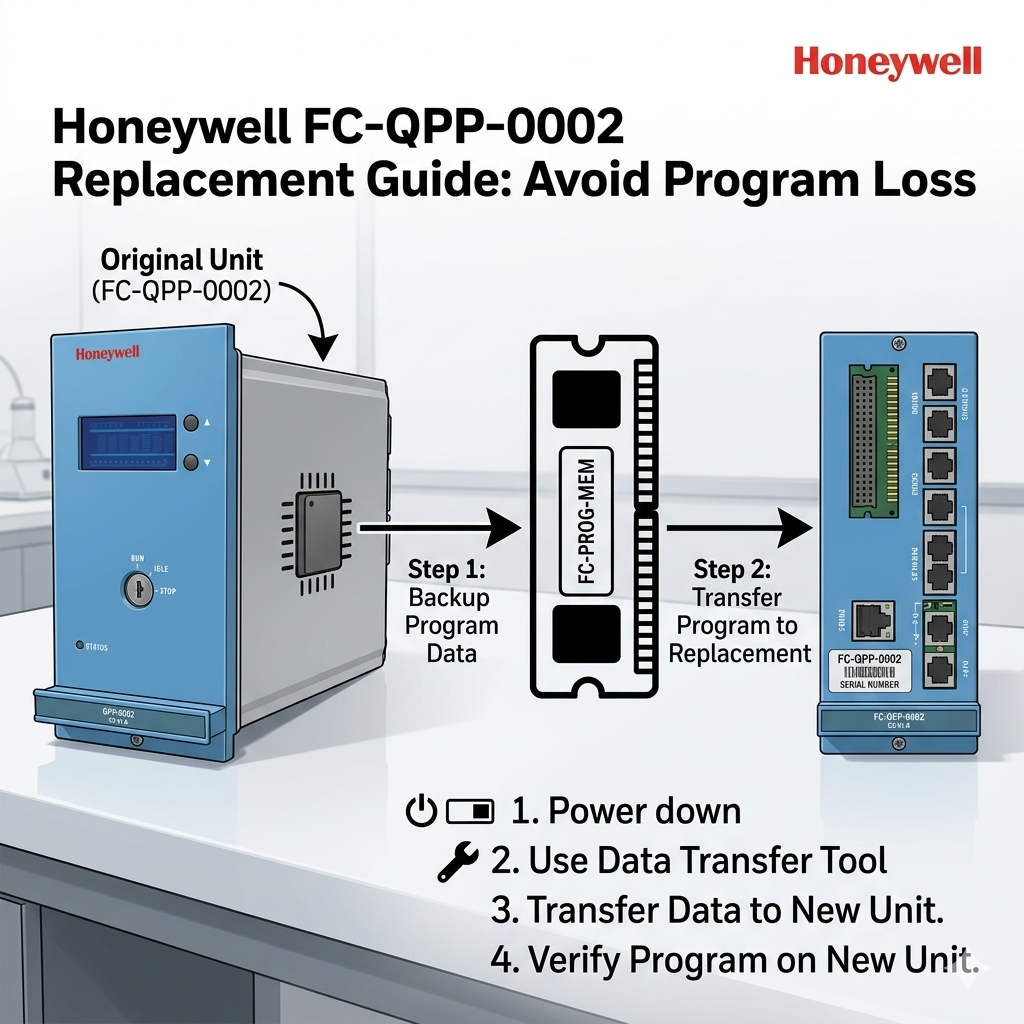
Honeywell FC-QPP-0002 Replacement Guide: Avoid Program Loss
2026-05-06
ExcerptHoneywell FC-QPP-0002 Battery Replacement: Protecting Critical Controller Memory The Vital Role of Battery Integrity in DCS Operations The Honeywell FC-QPP-0002 battery provides essential backup power for volatile memory within processor modules. This component protects control logic, calibration data, and communication parameters from sudden erasure. In industries such as petrochemical and pharmaceutical production, memory loss triggers […]
Honeywell FC-QPP-0002 Battery Replacement: Protecting Critical Controller Memory
The Vital Role of Battery Integrity in DCS Operations
The Honeywell FC-QPP-0002 battery provides essential backup power for volatile memory within processor modules. This component protects control logic, calibration data, and communication parameters from sudden erasure. In industries such as petrochemical and pharmaceutical production, memory loss triggers expensive unplanned shutdowns. Furthermore, losing historical runtime data can complicate regulatory compliance and safety audits. Therefore, maintaining a healthy battery is non-negotiable for system stability.
Understanding Memory Retention and Data Protection
The FC-QPP-0002 maintains SRAM configuration memory during primary power interruptions or maintenance cycles. Without this backup voltage, the controller may undergo a “cold start” during reboot. This leads to the loss of tuning parameters and redundant pair synchronization. As a result, many mysterious startup failures actually stem from degraded batteries. I have observed that weak batteries often bypass initial alarms but fail under load. Consequently, proactive replacement remains the most reliable strategy.
Advantages of Hot-Swap Maintenance Procedures
Most modern Honeywell control processors support battery replacement while the unit remains fully energized. This “hot-swap” method is inherently safer because the backplane supply powers the memory. Using this technique eliminates the need for logic re-downloads or process interruptions. Moreover, it reduces the risk of flash-memory rewrite errors during recovery. However, engineers must always verify their specific hardware revision before attempting an online swap. Maintaining power continuity during the swap ensures that your operational recipes remain untouched.
Environmental Factors and Service Life Variables
Industrial cabinet temperatures significantly impact the chemistry of the FC-QPP-0002. High temperatures in marshalling cabinets can reduce the battery’s functional life by nearly 50%. Therefore, systems located near furnaces or compressors require more frequent inspections. Electrolyte leakage or terminal oxidation can also trigger random processor faults. In my professional opinion, relying solely on nominal life specifications is a mistake. Instead, establish a preventive maintenance schedule based on your specific site conditions.
Recommended Installation Steps to Prevent Data Loss
Before starting, confirm the controller is in a healthy “RUN” state with no active faults. Keep the controller powered on during the entire replacement process to protect the volatile RAM. I recommend completing the physical battery swap in under 30 seconds to minimize risk. Carefully remove the old cell and insert the new one while observing correct polarity. Finally, verify the battery connector seating to ensure a low-resistance electrical path.
Technical Implementation Guidelines
- ✅ Verify the controller status is active and synchronized before starting.
- ⚙️ Maintain continuous primary power to the rack during battery swaps.
- 🔧 Use precision tools to avoid short-circuiting adjacent electronic components.
- ✅ Confirm the battery polarity matches the housing markings exactly.
- ⚙️ Document the replacement date on the cabinet maintenance log.
Industrial Application: Pharmaceutical Batch Continuity
A major pharmaceutical facility recently faced a critical battery alarm during a high-value vaccine batch. By following the hot-swap procedure, the maintenance team replaced the FC-QPP-0002 without stopping the controller. This prevented a “cold start” that would have invalidated the entire batch record. This case study demonstrates how a simple hardware task, when performed correctly, saves millions in production value. It underscores the importance of standardized procedures in high-stakes automation environments.
Frequently Asked Questions
Q: Will the controller lose its program immediately if I remove the battery?
A: No, if the controller is powered by the backplane, the memory stays active. The battery only takes over when the main power fails. However, you must install the new battery before any accidental power dip occurs.
Q: Can I use a standard off-the-shelf lithium battery as a substitute?
A: I strongly advise against using non-certified substitutes for the FC-QPP-0002. Industrial batteries have specific discharge curves and connector pinouts designed for Honeywell hardware. Using the wrong chemistry can trigger false alarms or damage charging circuits.
Q: How do I know the replacement was successful?
A: Check the system diagnostic logs or the controller faceplate LEDs. A successful installation should clear any “Battery Low” or “Memory Battery” alarms within the DCS workstation. If the alarm persists, inspect the connector for oxidation or loose seating.
Related Posts