
1746-OW4 Output Module | Allen-Bradley SLC 500 | 4 Relay Contacts
Introduction:
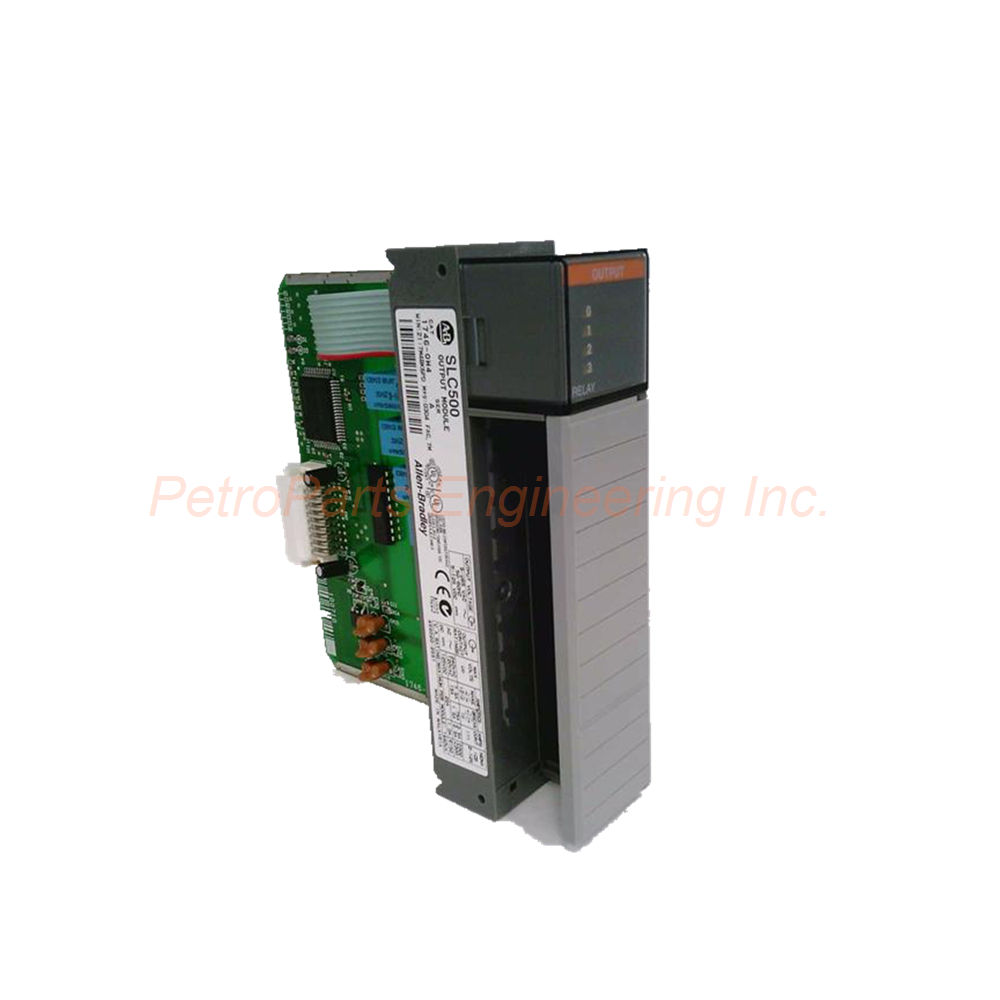
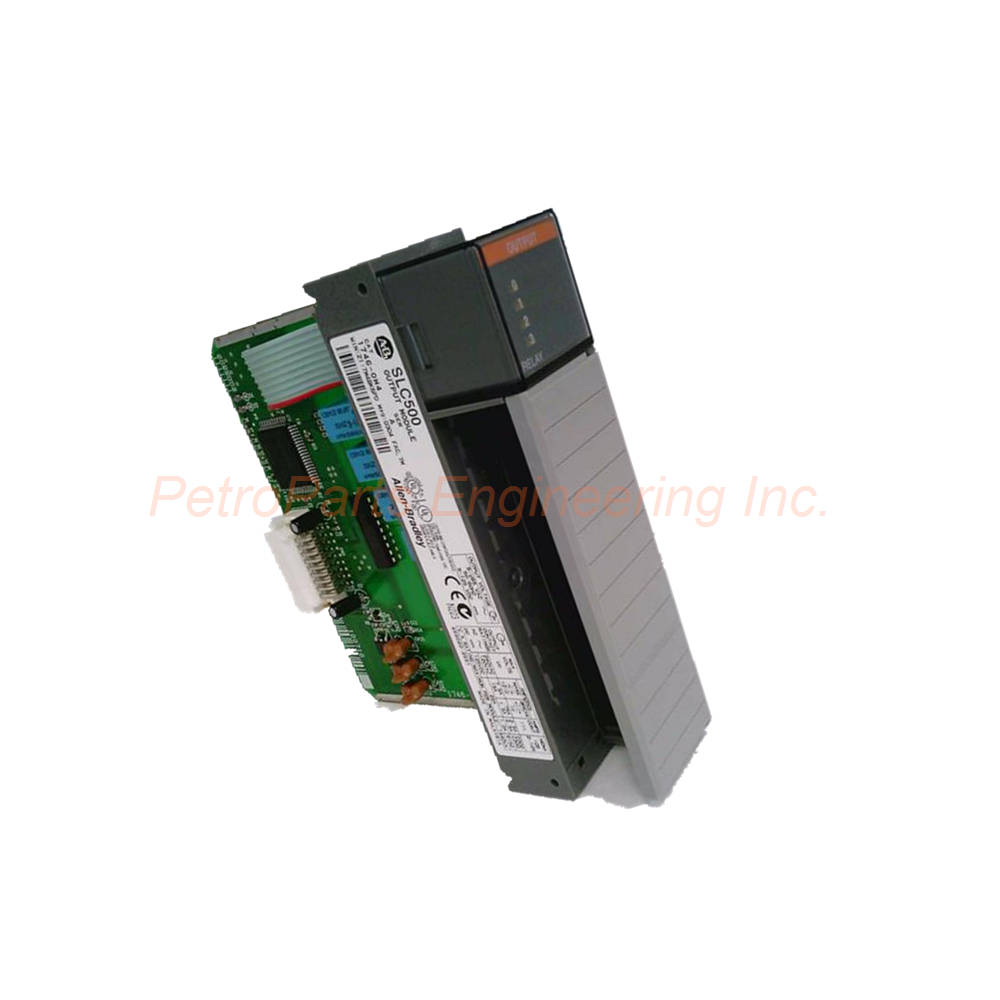
The 1746-OW4 is a SLC 500 digital contact output module from Allen-Bradley. It provides 4 N.O. relay contact outputs for AC or DC loads.
 Customer Reviews
UBEST Automation – Trusted Global Automation Parts Supplier
We offer a wide range of in-stock industrial automation spare parts. All products come with a 12-month warranty and a 30-day refund for quality issues.
Product Attributes:
Notice: For real-time prices and inventory, please click the button below to contact us.
Product Overview for the 1746-OW4 Digital Contact Output Module
The 1746-OW4 is a SLC 500 digital contact output module from Allen-Bradley. Firstly, this module is manufactured by Rockwell Automation under the Allen-Bradley brand. Specifically, the 1746-OW4 provides 4 N.O. (normally open) relay contact outputs. In addition, this module operates on either AC or DC voltage sources. The operating voltage range is 5-265 Volt AC or 5-125 Volts DC. Consequently, the 1746-OW4 is suitable for any application requiring relay contact type outputs. Therefore, this module controls various loads including solenoids, motor starters, and indicator lights.
Key Features and Benefits
Four Relay Contact Outputs
The 1746-OW4 offers 4 independent relay outputs. Firstly, all four outputs are normally open (N.O.) contact types. In addition, the module has 4 common points for flexible wiring configurations. Specifically, each output can switch either AC or DC loads without modification. Consequently, the 1746-OW4 provides versatile output capability for mixed load types. Therefore, one module handles both AC and DC control requirements.
Wide Operating Voltage Range
The 1746-OW4 accepts a broad range of switching voltages. Firstly, the AC operating range is 5 to 265 Volts AC for flexibility. In addition, the DC operating range is 5 to 125 Volts DC for low and medium voltage applications. Specifically, this wide range accommodates various control circuits without additional interface relays. Consequently, the 1746-OW4 reduces component count in your control panel. Therefore, system complexity and cost are both minimized.
High Output Current Capacity
The 1746-OW4 provides ample current for most field devices. Firstly, each output handles 1.5 amps at 120V AC for typical loads. In addition, each output handles 1.2 amps at 24V DC for solenoid and relay control. Specifically, the maximum continuous current per module is 8 amps total. Consequently, the 1746-OW4 can control multiple devices simultaneously within the total current limit. Therefore, external interposing relays are often unnecessary.
Low Backplane Current Draw
The 1746-OW4 consumes minimal power from the SLC 500 backplane. Firstly, the backplane current is only 45 milliamps at both 5V DC and 24V DC. In addition, this low consumption leaves ample power budget for other modules. Specifically, the maximum thermal dissipation is only 1.9 Watts for the entire module. The heat dissipation per point is 0.133 Watts. Consequently, the 1746-OW4 does not significantly warm the control cabinet. Therefore, you can install many output modules without overheating concerns.
Fast Step Response
The 1746-OW4 provides rapid output switching for responsive control. Firstly, the step response is 60 milliseconds for input to output transition. In addition, the output step response is 2.5 milliseconds for relay closure. Specifically, the signal delay for both ON and OFF states is 10 milliseconds. Consequently, the 1746-OW4 suits applications requiring moderately fast output response. Therefore, packaging and assembly machines benefit from this module's performance.
Maintenance Considerations
The 1746-OW4 relay module requires periodic inspection. Firstly, relay contacts are vulnerable to chemical exposure in harsh environments. In addition, chemicals may degrade the sealing materials around the relay components. Specifically, you should inspect the module periodically to detect any degradation early. Therefore, quickly replace the 1746-OW4 if any degradation is found. This preventive maintenance ensures reliable operation and prevents unexpected machine downtime.
Technical Specifications of the 1746-OW4
General Specifications
Manufacturer: Rockwell Automation.
Brand: Allen-Bradley.
Part Number / Catalog No.: 1746-OW4.
Series: SLC 500.
Module Type: Digital Contact Output Module.
Applications: Relay Contact Outputs.
Output Specifications
Number of Outputs: 4.
Output Types: N.O. Relay Contact.
Number of Common Points: 4.
Minimum Load Current: 1 mA at 5V DC.
Voltage Specifications
AC Operating Voltage: 5 to 265 Volt AC.
DC Operating Voltage: 5 to 125 Volts DC.
Signal Delay (ON and OFF): 10 ms.
Current Specifications
Current per Output (120V AC): 1.5 amps.
Current per Output (24V DC): 1.2 amps.
Maximum Continuous Current per Module: 8 amps.
Backplane Current (5V DC): 45 milliamps.
Backplane Current (24V DC): 45 milliamps.
Performance Specifications
Step Response (Input to Output): 60 milliseconds.
Step Response (Output Relay): 2.5 milliseconds.
Thermal Specifications
Maximum Thermal Dissipation (Module): 1.9 W.
Heat Dissipation per Point: 0.133 W.
Installation Guide for the 1746-OW4
Follow these steps for a proper installation of the 1746-OW4.
Step 1: Power Disconnection
Firstly, disconnect all power to the SLC 500 chassis before installation. The 1746-OW4 requires a de-energized state for safe wiring. Then, verify that no voltage is present on any conductor. Consequently, personal injury and module damage will be prevented.
Step 2: Module Installation
After that, insert the 1746-OW4 into an available SLC 500 chassis slot. Align the module with the card guides on the top and bottom. Then, push firmly until the module seats completely in the backplane connector. Secure the module using the retaining screws at the top and bottom.
Step 3: Field Device Wiring
Then, connect your field devices to the 1746-OW4 output terminals. Each of the 4 N.O. relay contacts has its own common terminal. For AC loads, connect the hot line to the common and the load to the N.O. terminal. For DC loads, observe proper polarity for the specific load type.
Step 4: Load Current Verification
Furthermore, verify that each output load does not exceed 1.5 amps at 120V AC. For 24V DC loads, ensure each output stays below 1.2 amps. The total current across all 4 outputs must remain under 8 amps. Consequently, the 1746-OW4 will operate within its safe design limits.
Step 5: Power Up and Testing
Finally, apply power to the SLC 500 system. Then, energize each output from your PLC program. Listen for the relay click and verify the output indicator illuminates. Measure the voltage across each load to confirm proper switching.
Packaging List for the 1746-OW4
1746-OW4 Digital Contact Output Module (1 unit)
Product documentation and installation guide (1 copy)
Frequently Asked Questions (FAQs) About the 1746-OW4
Q1: How many outputs does the 1746-OW4 provide?
The 1746-OW4 provides 4 normally open (N.O.) relay contact outputs. It also has 4 common points for flexible wiring. Therefore, one module controls up to 4 separate field devices.
Q2: What voltage ranges does the 1746-OW4 support?
The 1746-OW4 supports two voltage ranges. For AC operation, the range is 5 to 265 Volts AC. For DC operation, the range is 5 to 125 Volts DC. Therefore, this module works with both AC and DC control circuits without modification.
Q3: What is the current rating per output on the 1746-OW4?
Each output on the 1746-OW4 handles 1.5 amps at 120V AC. For 24V DC loads, each output handles 1.2 amps. The maximum continuous current per module is 8 amps. Therefore, always verify your load currents stay within these limits.
Q4: What is the backplane current draw of the 1746-OW4?
The 1746-OW4 draws 45 milliamps from both the 5V DC and 24V DC backplane supplies. This low consumption leaves ample power for other SLC 500 modules. Consequently, you can install many output modules without exceeding chassis power limits.
Q5: Why does the 1746-OW4 require periodic inspection?
The 1746-OW4 uses relay contacts that are vulnerable to chemical exposure. Chemicals may degrade the sealing materials around the relays. Therefore, inspect the module periodically for degradation and replace it quickly if any is found. This preventive maintenance ensures reliable operation.