
STBNIP2311 | Schneider Electric Advantys STB NIM, Modbus TCP
Introduction:
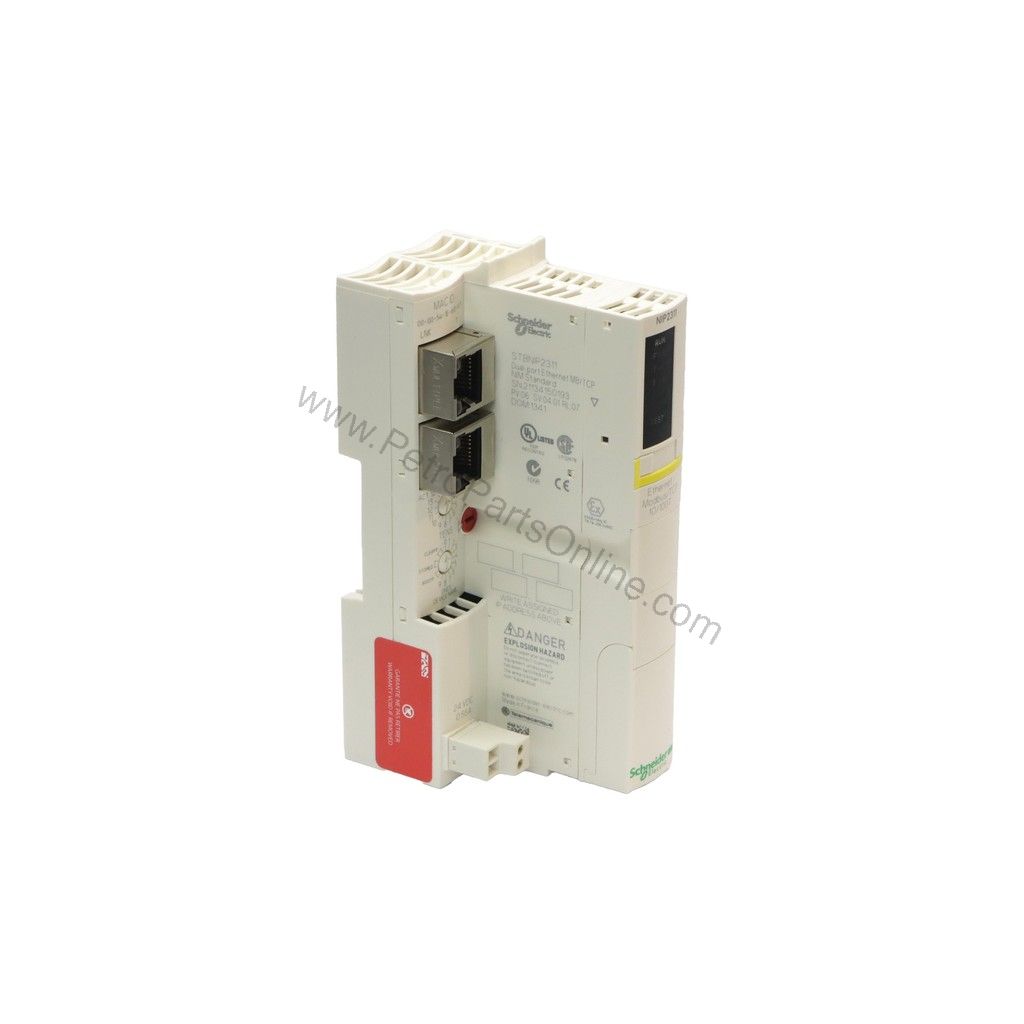
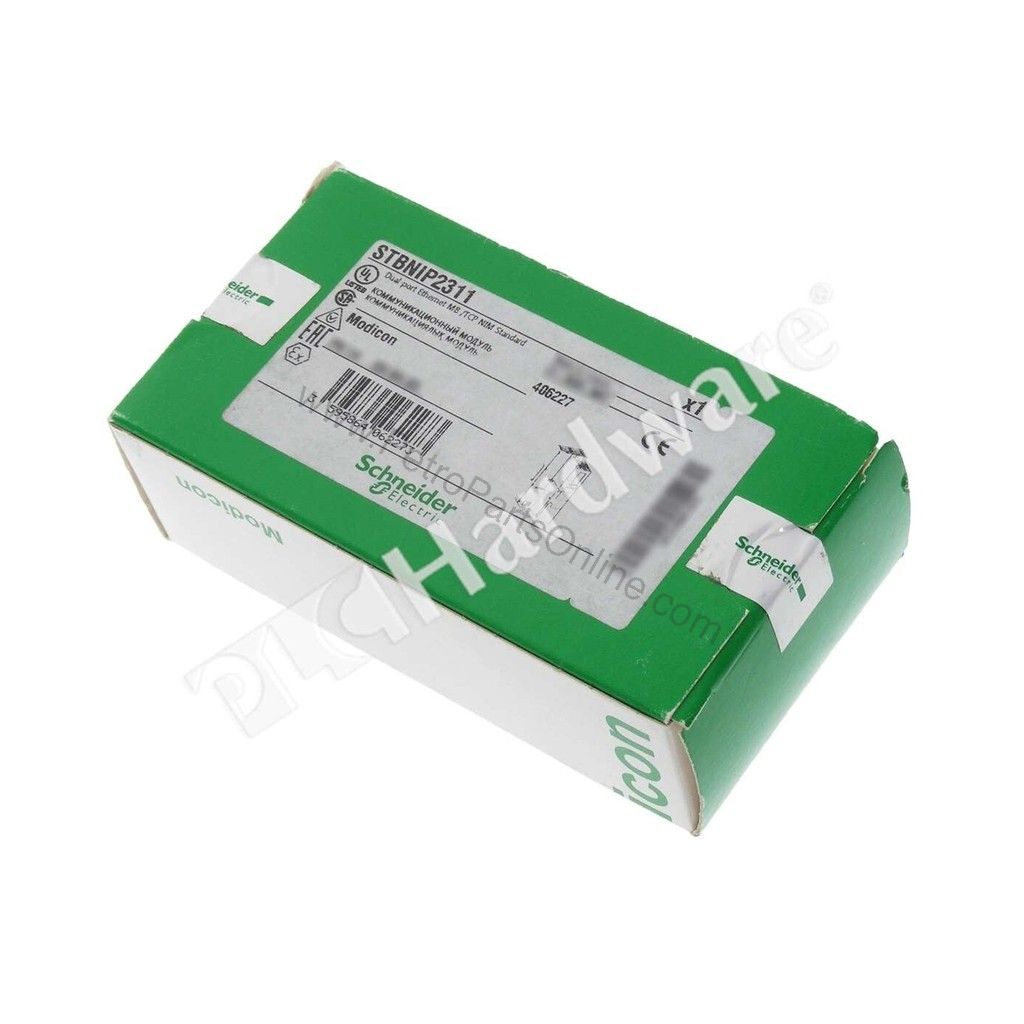
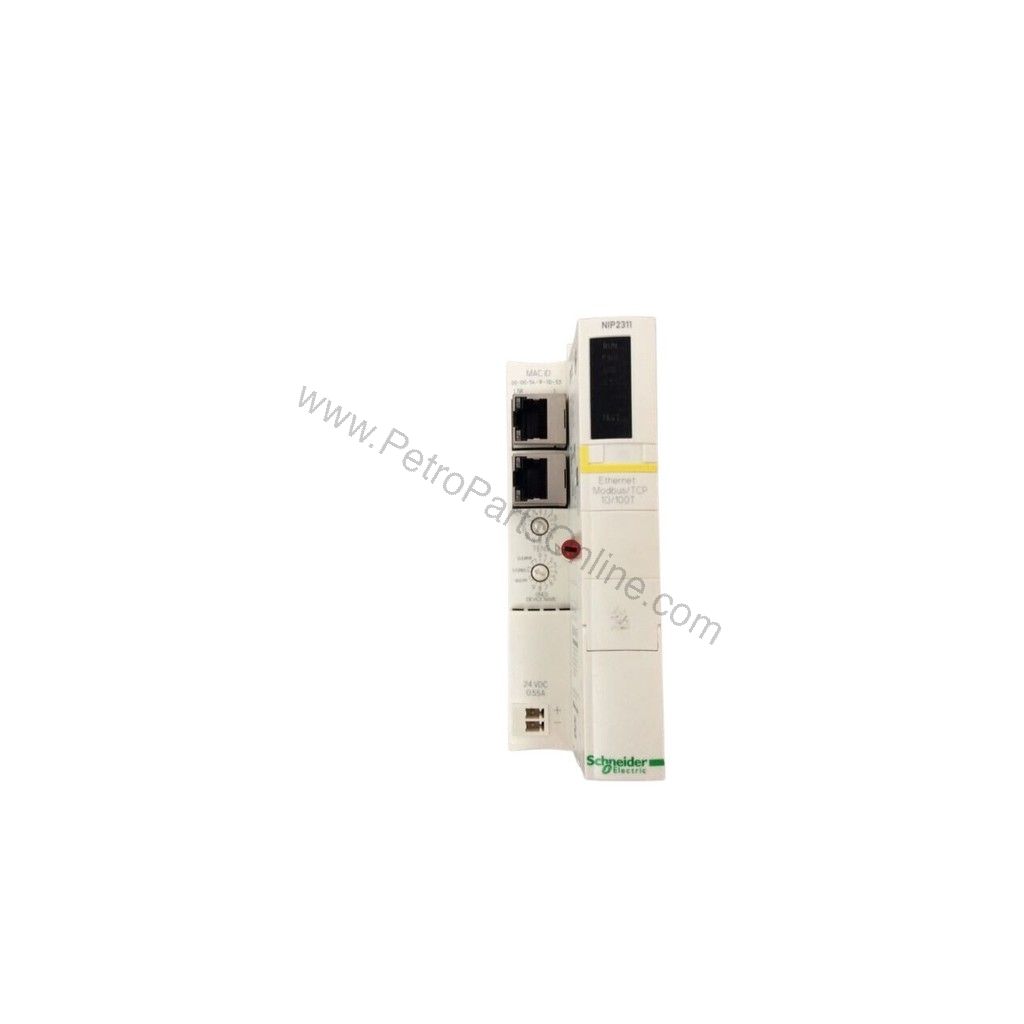
The STBNIP2311 is a dual-port Ethernet Modbus TCP/IP network interface module for Advantys STB islands. Built for demanding environments, it supports up to 32 I/O modules.
 Customer Reviews
UBEST Automation – Trusted Global Automation Parts Supplier
We offer a wide range of in-stock industrial automation spare parts. All products come with a 12-month warranty and a 30-day refund for quality issues.
Product Attributes:
Notice: For real-time prices and inventory, please click the button below to contact us.
STBNIP2311: A Field-Proven Network Interface for Advantys STB Islands
When a distributed I/O island needs dependable Ethernet connectivity in a mission-critical oil & gas process, the network interface module is the single point of failure that matters most. The STBNIP2311 from Schneider Electric is a standard dual-port network interface module (NIM) for the Advantys STB series, engineered to bring Modbus TCP/IP connectivity to up to 32 I/O modules per island. Built for demanding environments, it remains a rugged, field-proven choice for legacy control architectures where reliability you can depend on is non-negotiable.
Key Features and Technical Specifications
- Dual RJ45 ports: 2 x RJ45 with auto MDIX for daisy-chain or redundant ring topologies.
- Protocols: Ethernet Modbus TCP/IP and IEEE 802.3 compliance.
- Transmission rate: 10/100 Mbit/s with half/full duplex support.
- Supply voltage: 24V DC (SELV) with 430 mA input current.
- Logic bus output: 5.25V DC (±0.21%), 1.2 A nominal, derated to 0.575 A at 60–70 °C.
- I/O capacity: Up to 32 addressable I/O modules per island.
- Segments: 1 primary segment plus up to 6 extensions.
- Communication services: Embedded web server, BootP/DHCP, SNMP, HTTP.
- Local signalling: 7 LEDs (ACT, RUN, ERR, MS, NS, PWR, TEST).
- Protection rating: IP20.
- Dimensions: 128.3 × 70 × 40.5 mm; weight 0.13 kg.
The logic bus output derating at elevated temperatures is a distinctive specification with real-world impact: in enclosures where ambient temperatures climb above 60 °C, the module delivers reduced current to the I/O bus, which must be factored into power budgeting for downstream modules.
Applications and Use Cases in Oil & Gas
The STBNIP2311 is typically deployed where a compact, Ethernet-connected I/O island sits close to the process. In upstream wellhead control panels, it aggregates digital and analog signals from pressure and flow instruments and presents them over Modbus TCP/IP to a supervisory PLC. In midstream pump and compressor stations, the dual-port design supports ring topologies that maintain communication if a single cable is damaged—a common failure mode in outdoor installations. Downstream, it serves as a reliable interface for tank farm level monitoring and valve control. For legacy systems facing obsolescence, the STBNIP2311 offers a straightforward path to maintain existing Advantys STB islands without a full I/O rip-out.
Installation and Setup Guidance
Mount the module on a DIN rail at the head of the STB island, ensuring the primary segment is terminated correctly. Connect the 24V DC supply observing SELV requirements, and verify the input current budget against the 430 mA draw. Use shielded Ethernet cable for the RJ45 ports, particularly in electrically noisy environments. The embedded web server and BootP/DHCP services simplify initial IP address assignment; for fixed-address networks, configure a static IP via the web interface. Confirm that the total number of I/O modules does not exceed 32 and that extension segments do not exceed six. The seven LEDs provide immediate visual diagnostics during commissioning.
Compatibility and Integration
The STBNIP2311 integrates with any Modbus TCP/IP-capable controller or SCADA system, including Schneider Electric Modicon PLCs and third-party masters. It supports standard Ethernet infrastructure (switches, routers) and can be monitored via SNMP. Integration Note: Wiring into fieldbus networks may require an external gateway or connection module; confirm cable and gateway compatibility with the supplier before commissioning. The removable memory card stores I/O configuration, simplifying replacement and reducing downtime.
Maintenance and Reliability
In harsh oil & gas environments, scheduled inspection of the RJ45 connectors and cable glands prevents moisture ingress and intermittent faults. Check the LEDs monthly for any ERR or NS indications. Because the module is IP20-rated, it must be installed within a suitable enclosure; ensure ambient temperature inside the enclosure does not exceed the derating threshold of 60 °C for full logic bus current. The STBNIP2311 is a dependable, field-proven module, but its discontinued lifecycle status means spare units should be sourced proactively to avoid unplanned outages.
Product Support and Availability
PetroPartsOnline maintains a stock of STBNIP2311 modules and related Advantys STB components for critical operations. Contact PetroPartsOnline for parts suited to your application’s requirements, including replacement options and lifecycle guidance.
Frequently Asked Questions
Q: What is the maximum number of I/O modules the STBNIP2311 can address?
A: The STBNIP2311 supports up to 32 addressable I/O modules per island, with one primary segment and up to six extensions.
Q: What protocols does the STBNIP2311 support?
A: It supports Ethernet Modbus TCP/IP and IEEE 802.3, with communication services including an embedded web server, BootP/DHCP, SNMP, and HTTP.
Q: What is the supply voltage and input current of the STBNIP2311?
A: The module operates on 24V DC (SELV) with an input current of 430 mA.
Q: Is the STBNIP2311 still available?
A: The STBNIP2311 is listed as discontinued and superseded by the Modicon X80 range. Contact PetroPartsOnline for availability and replacement options.
Q: What is the operating temperature range of the STBNIP2311?
A: Operating temperature is not available in the provided data. Refer to the official Schneider Electric datasheet or contact PetroPartsOnline for application-specific guidance.