Beckhoff at SPS 2026: IPC, XPlanar, TwinCAT Vision and TwinSAFE on One Machine
2026-11-20
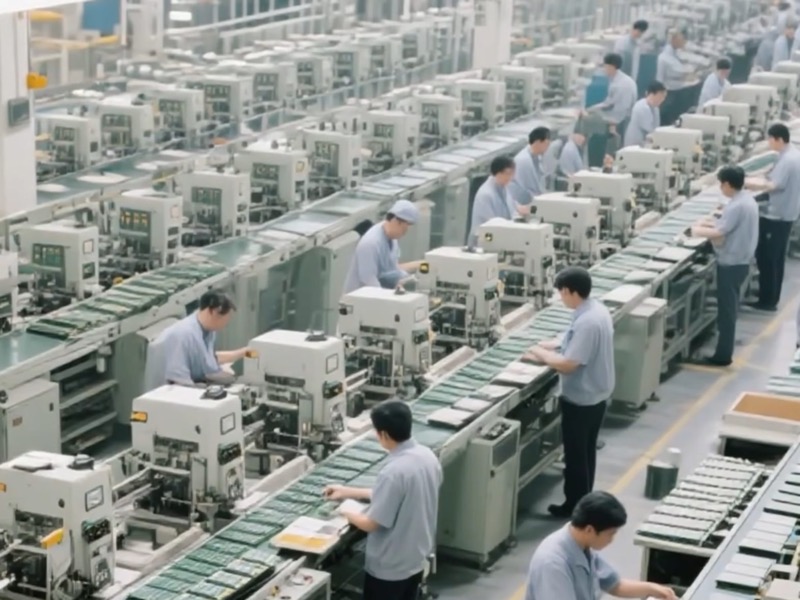
ExcerptBy Wayne — Sales Engineer Beckhoff will use SPS 2026 in Nuremberg, 24–26 November, to argue that industrial PCs, XPlanar transport, TwinCAT Vision and TwinSAFE belong in one engineering architecture, demonstrated on a compact copy of its own EtherCAT terminal final-inspection line. None of the four is new for this show; the commercial claim is […]
Beckhoff will use SPS 2026 in Nuremberg, 24–26 November, to argue that industrial PCs, XPlanar transport, TwinCAT Vision and TwinSAFE belong in one engineering architecture, demonstrated on a compact copy of its own EtherCAT terminal final-inspection line. None of the four is new for this show; the commercial claim is fewer separate controllers and a shorter spare-parts list.
Key takeaways
- SPS 2026 runs 24–26 November 2026 at the Nuremberg Exhibition Center. Beckhoff’s main stand is Hall 7, Booth 406, according to its official event page.
- The stand is organised around one working machine in the Highlight Forum, with theme walls that explain each automation function separately.
- The trade release issued on 19 November 2026 describes that machine as a compact derivative of the real final-inspection system for EtherCAT terminals in Beckhoff’s own production. Beckhoff’s own event page calls it “a real machine” without naming it.
- The sequence on the machine: Data Matrix identification, individual mover transport, functional testing, calibration and documentation, with TwinCAT Vision, TwinSAFE, HMI and traceability data in the same project.
- “One machine, one control system” is not an official Beckhoff slogan. The official English theme is “Futuristic topics require end-to-end automation”.
- Industrial PCs (1986), XPlanar (2018), TwinCAT Vision (2017) and TwinSAFE (2005) are all established product lines. Nothing in the published material suggests new hardware for any of them at this show.
What is Beckhoff showing at SPS 2026?
Beckhoff’s SPS 2026 stand is built around one working machine in its Highlight Forum, plus theme walls that explain each function. The official theme is “Futuristic topics require end-to-end automation”. The show runs 24–26 November 2026 at the Nuremberg Exhibition Center, and Beckhoff’s main stand is Hall 7, Booth 406.
The official event page frames the argument in one sentence: machines have to become more precise, more flexible and more intelligent while staying economical and scalable, and that combination is difficult to deliver from isolated controllers. Beckhoff’s answer is to put control, motion, communication, safety, measurement, image processing, robotics and AI tooling into a single architecture rather than coupling separate systems together.
The published highlight list is short and deliberately broad: highly dynamic motion and robotics, precise synchronisation over EtherCAT, integrated safety, measurement technology and vision, physical AI in a real machining process, and the floating movers of XPlanar. Physical AI and the TwinCAT PLC++ engineering and runtime platform are the genuinely new topics of this show. The four technologies in our headline are the supporting cast, not the announcement.
Is “one machine, one control system” an official Beckhoff theme?
No. Beckhoff’s published English theme is “Futuristic topics require end-to-end automation”. German trade coverage that broke the stand details on 19 November 2026 headlined it “one machine, many automation functions, one system”. “One machine, one control system” is a compression of that idea, not a slogan Beckhoff has published.
That distinction matters if you are citing the show in a specification, a tender document or an internal business case. Beckhoff’s German event page uses “Zukunftsthemen brauchen eine durchgängige Automatisierung”, and the English page renders it as end-to-end automation. Neither page claims that a single controller runs every axis of every machine; the argument is about one engineering and runtime environment, with EtherCAT carrying communication down to the field level.
Where the “one system” language does come from is the trade press. The etz report on smart-production.de ran the headline “eine Maschine, viele Automatisierungsfunktionen, ein System” and described the stand as making continuity the central message. If you need a short formulation, quote that and attribute it to the trade coverage rather than to Beckhoff.
Which four technologies are on the machine, and when did each first ship?
All four are established product lines rather than SPS 2026 launches. Industrial PCs trace back to Beckhoff’s first PC-based controller in 1986; XPlanar was unveiled in 2018, TwinCAT Vision launched in 2017 and TwinSAFE arrived in 2005. The exhibition shows them cooperating, not new versions of them.
| Technology | First released | What it contributes on the stand | New at SPS 2026? |
|---|---|---|---|
| Industrial PC | 1986 — Beckhoff’s first PC-based controller; 2026 marks 40 years of PC-based control | Runs TwinCAT, the HMI and the test sequencing; the same software stack scales from a compact Embedded PC to a multi-core industrial server | No new IPC model announced for this show |
| XPlanar | 2018 | Levitating planar movers carry each workpiece carrier to the station it needs, with no fixed mechanical link between stations | No; established product, shown in a new application |
| TwinCAT Vision | 2017 | Data Matrix identification, positioning of parts and LED inspection, configured inside the same TwinCAT project as the PLC code | No; established software module |
| TwinSAFE | 2005 | Safety functions for the enclosed machine, including the guarding that lets people work around an automated cell | No; established safety system |
| EtherCAT | 2003 | Field-level communication and synchronisation for the whole machine | No; the communication backbone the other four depend on |
Beckhoff’s own chronology supports those dates. The company states that it brought its first PC-based controller to market in 1986, that XPlanar followed the XTS linear transport system in 2018, and that TwinCAT Vision added image processing to the software platform in 2017. TwinSAFE appears in Beckhoff’s milestone list at 2005, alongside EtherCAT in 2003.
The practical reading for a machine builder is that none of this is a reason to postpone a project waiting for a new release. If the architecture fits, it fits today. If it does not, a new mover size or a faster IPC will not fix the mismatch.
What actually happens on the EtherCAT terminal final-inspection line?
The stand machine is a compact derivative of the real final-inspection system for EtherCAT terminals in Beckhoff’s own production. After Data Matrix identification, XPlanar movers take each workpiece carrier only to the stations it needs for functional testing, calibration and documentation, without rigid linking, while TwinCAT Vision handles identification, positioning and LED inspection.
The machine sits in the Highlight Forum rather than on a fixed exhibit wall, and the theme walls around it unpack each function. TwinSAFE secures the operation of the enclosed system, the HMI visualises sequences and states, and process and test data remain available for traceability. Because the carriers are not mechanically linked, a unit that needs an extra calibration step does not hold up the units behind it.
| Step | What happens | Function involved |
|---|---|---|
| 1. Identification | Each workpiece carrier is identified by its Data Matrix code before any test begins | TwinCAT Vision, HMI |
| 2. Transport | The mover travels directly to the station that unit requires, with no fixed conveyor sequence | XPlanar, EtherCAT |
| 3. Functional test and calibration | Automated test and adjustment routines run per unit, driven by the test recipe for that code | Industrial PC running TwinCAT, EtherCAT I/O terminals |
| 4. Documentation | Process and test results are recorded against the unit for traceability | TwinCAT, plant database |
| 5. Safe operation | The guarded cell is interlocked so the automated sequence can run safely | TwinSAFE |
One sourcing caveat is worth stating plainly. The detailed description above comes from the trade release distributed on 19 November 2026 and republished by European automation media. Beckhoff’s own SPS 2026 event page confirms that a real machine will run on the stand and lists the technologies involved, but it does not name the terminal final-inspection line. If you are quoting the line in a document, cite the trade release for the description and the event page for the stand details.
Why does removing separate controllers change the spare-parts equation?
One runtime, one engineering project and one fieldbus remove duplicate controllers, duplicate licences and duplicate diagnostics. In the spare-parts ledger that means fewer part numbers to hold, but also fewer suppliers to fall back on. The saving is real only if the machine’s safety functions and I/O mix still map onto what the platform offers.
Every separate subsystem on a machine carries its own hardware, firmware, configuration tool, licence and diagnostic path. A line with a motion controller, a vision box, a safety relay bank and a separate HMI panel multiplies all five. Consolidating onto a PC-based platform means the spare-parts list shrinks to one family of controllers, one set of I/O terminals and one software version to test and archive.
That is the argument the terminal inspection machine is built to make, and it is a familiar one in the industry. The counter-argument is concentration risk: when one vendor supplies the controller, the I/O, the transport system and the safety logic, a single change in roadmap or availability affects the whole machine. The mitigation is documented part numbers and a tested replacement path, not brand loyalty.
For machine builders working with EtherCAT-based architectures, the component choices are concrete rather than conceptual. A safety function might use the EL2911 TwinSAFE safe power supply terminal. Standard output switching might sit on an EL2872 16-channel digital output terminal. Axis feedback might come through an EL5021 SinCoS encoder terminal. Power distribution along the machine can use an EPP1321 EtherCAT P converter, and legacy Ethernet devices can be brought in through a BK9100 EtherCAT bus coupler.
What should an OEM check before standardising on one platform?
Before standardising, ask four questions: does the I/O count and safety rating cover the machine, is EtherCAT acceptable in the customer’s network, who owns the safety certificate, and can the exact panel PC, terminal and card part numbers be sourced for ten years? Answers in writing beat a platform brochure.
- Safety scope. Confirm the achievable performance level or SIL, the response time and the certificate number for the exact combination of terminals you intend to use. A safety system’s rating applies to a configuration, not to a brand.
- I/O headroom and mix. Count fail-safe inputs, fail-safe outputs and standard channels separately. Leave room for the variant the customer will ask for in year three, not just the first machine.
- Network and IT policy. EtherCAT is deterministic and fast, but plant IT teams increasingly ask what the machine exposes to the corporate network. Plan the boundary, the remote-access route and the update process at tender stage.
- Vision workload. Running identification and inspection inside the control project saves an interface, but it consumes CPU time on the same IPC that runs the motion and the HMI. Size the controller for the worst-case inspection load.
- Spares and lifecycle. Record the exact model, firmware and option cards. Ask which parts are stocked regionally, which are build-to-order, and which already have a published successor.
- Skills. One platform concentrates knowledge. If the only engineer who understands the project leaves, the machine’s supportability leaves with them. Documentation and version control are part of the architecture decision.
For a comparison from another vendor at the same show, our analysis of ABB’s SPS 2026 PlutoFlex C28 preview covers the safety-controller side of the same argument. For the wider catalogue, the Beckhoff PLC and EtherCAT I/O collection lists the terminal families referred to above.
Frequently asked questions
The show runs 24–26 November 2026 in Nuremberg, Beckhoff is in Hall 7 at Booth 406, “one machine, one control system” is not an official slogan, the inspection machine is a compact derivative of Beckhoff’s own production system, and none of the four technologies is new for this exhibition.
When and where is SPS 2026, and where is the Beckhoff stand?
SPS 2026 runs from 24 to 26 November 2026 at the Nuremberg Exhibition Center in Germany. Beckhoff’s main stand is in Hall 7, Booth 406, according to the company’s official event page. Beckhoff also appears on partner stands, including the EtherCAT Technology Group in Hall 5, Booth 310.
Is “one machine, one control system” an official Beckhoff slogan?
No. Beckhoff’s published theme is “Futuristic topics require end-to-end automation”. The phrase “one machine, many automation functions, one system” comes from German trade coverage published on 19 November 2026. Treat “one machine, one control system” as a media summary and attribute it accordingly rather than quoting it as Beckhoff’s own wording.
Is the final-inspection machine a real Beckhoff production line?
It is a compact derivative of the real final-inspection system for EtherCAT terminals used in Beckhoff’s own production, according to the trade release of 19 November 2026. The stand version is scaled for exhibition, not a production asset. Beckhoff’s event page describes the exhibit only as “a real machine” and does not name the terminal line.
Are the industrial PC, XPlanar, TwinCAT Vision and TwinSAFE new at SPS 2026?
No. Beckhoff’s first PC-based controller reached the market in 1986, XPlanar was unveiled in 2018, TwinCAT Vision launched in 2017 and TwinSAFE dates from 2005. SPS 2026 shows these established products working together on one machine. The new topics at this show are physical AI and the TwinCAT PLC++ platform.
What does the demonstration machine actually do?
Each workpiece carrier is identified by Data Matrix code, then an XPlanar mover takes it to the stations that unit needs for functional testing, calibration and documentation. TwinCAT Vision handles identification, positioning and LED inspection, TwinSAFE guards the enclosed cell, and the HMI visualises the sequence. Test data is retained for traceability.
Does one control platform really reduce spare parts?
It reduces the number of distinct controllers, engineering tools, licences and diagnostic paths a maintenance team has to support. It does not remove the need to stock wearing parts, terminals or a spare IPC. The practical benefit is a shorter, better-documented parts list, offset by greater dependence on a single vendor’s roadmap and availability.
Sources
- Beckhoff Automation, Beckhoff at SPS 2026, official event page, accessed 20 November 2026.
- Beckhoff Automation, Press service and SPS 2026 press conference details, accessed 20 November 2026.
- etz / smart-production.de, Beckhoff auf der SPS 2026: eine Maschine, viele Automatisierungsfunktionen, ein System, 19 November 2026.
- Industry EMEA, PC-Based Control Unifies Automation Functions At SPS 2026, 19 November 2026.
- Beckhoff Automation, XPlanar planar motor system, product page, accessed 20 November 2026.
- Beckhoff Automation, 40 years of PC-based control, accessed 20 November 2026.
- Beckhoff Automation, Real-time image processing for PLC programmers (TwinCAT Vision launch), November 2017.
- Beckhoff Automation, Technological milestones (TwinSAFE 2005, EtherCAT 2003), accessed 20 November 2026.
- Beckhoff Automation, Hans Beckhoff receives the 2025 German Mechanical Engineering Award (first PC-based controller 1986; XPlanar 2018).
- Mesago Messe Frankfurt, SPS – Smart Production Solutions, Nuremberg, accessed 20 November 2026.
Talk to us
If you are planning a machine around a single control platform, the useful starting point is the existing part-number list: controllers, I/O terminals, safety terminals and panel hardware, with firmware versions. We can check which items are stocked, which have a published successor and which have to be sourced as a like-for-like replacement.
Start with our controllers and CPUs section, or send the model list through our contact page. The specification decides what the machine can do; the spare-parts record decides how long it can keep doing it.
Related Posts