
200150-11-05 Bently Nevada Accelerometer | 100 mV/g Trendmaster Sensor

Introduction:
The 200150-11-05 is a general purpose accelerometer for Trendmaster systems. It offers 100 mV/g sensitivity and multiple hazardous area approvals.
 Customer Reviews
UBEST Automation – Trusted Global Automation Parts Supplier
We offer a wide range of in-stock industrial automation spare parts. All products come with a 12-month warranty and a 30-day refund for quality issues.
Product Attributes:
Notice: For real-time prices and inventory, please click the button below to contact us.
Bently Nevada 200150-11-05 General Purpose Accelerometer
Product Overview
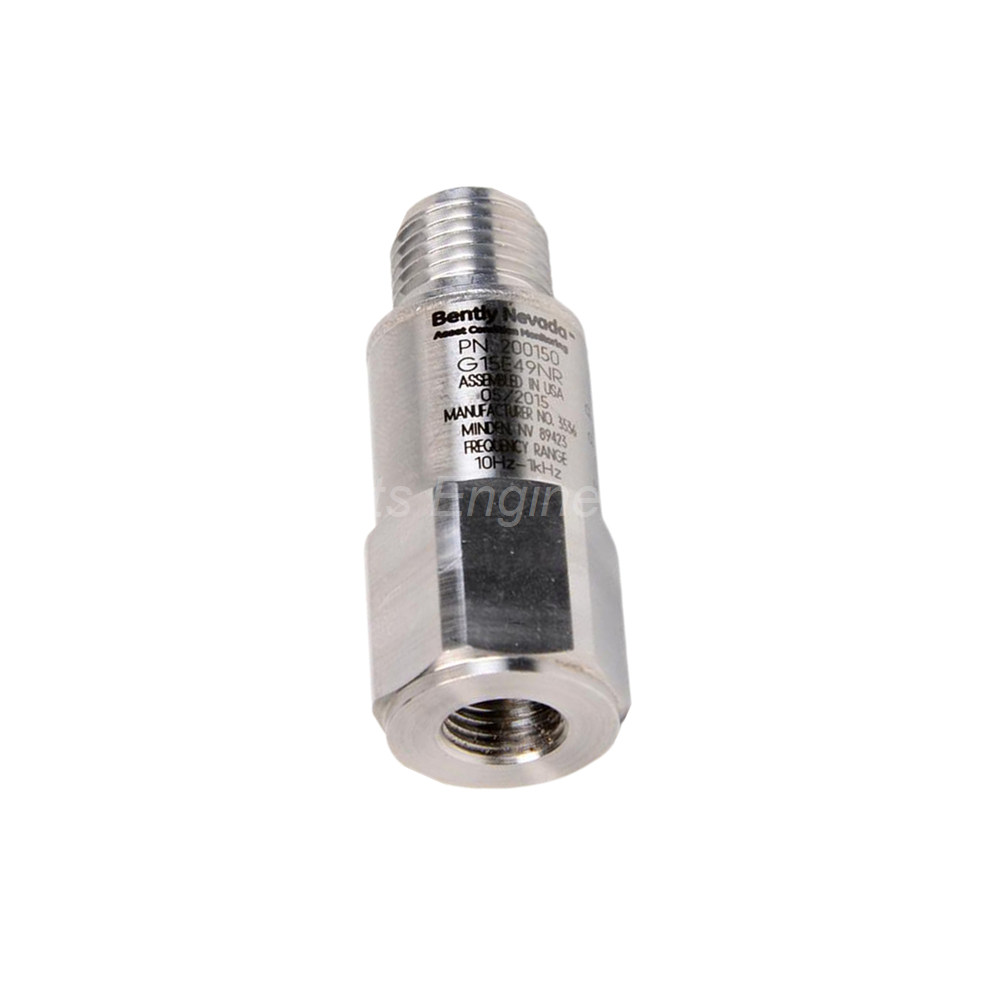
The 200150-11-05 is a high-quality accelerometer from Bently Nevada. This general purpose sensor works with Trendmaster 2000 and Trendmaster Pro systems. The 200150-11-05 comes with a 3/8-24 to 1-1/4 NPT mounting stud. Additionally, this unit includes a 1-3/4 inch hex stud for easy installation. Engineers use this accelerometer for general vibration monitoring applications. Therefore, the 200150-11-05 suits turbomachinery, pumps, compressors, and fans. The sensor is proudly made in the U.S.A. with 316L stainless steel construction.
Ordering Information Breakdown
The model number 200150-11-05 tells you exactly what you receive. First, 200150 represents the base accelerometer model. Second, the -11 option specifies the mounting stud configuration. This stud measures 3/8-24 to 1-1/4 NPT with a 1-3/4 inch hex profile. Finally, the -05 option indicates multiple hazardous area approvals. Specifically, these approvals include CSA, ATEX, and IECEx certifications. Consequently, the 200150-11-05 operates safely in explosive atmospheres.
Electrical Specifications
The 200150-11-05 delivers precise electrical performance at +25°C (+77°F). Sensitivity at 80 Hz measures 10.2 mV/(m/s²) with ±12% tolerance. This value equals 100 mV/g in imperial units. Therefore, the 200150-11-05 provides strong signal output for monitoring systems. The measurement range reaches ±245 m/s² (±25 g peak). Additionally, the low-end measurement range sits at 14.7 mm/s² (1.5 mg).
The frequency range references to 80 Hz with ±10% tolerance. Specifically, the 200150-11-05 operates from 10 to 1000 Hz (600 to 60,000 cpm). Mounted resonant frequency exceeds 20 kHz (>1200 kcpm). Consequently, this sensor avoids mechanical resonance within its operating range. Amplitude linearity measures ±2% from 1 to 10 g peak. Transverse sensitivity stays at ≤7% for accurate directional measurement.
Bias and Settling Characteristics
The 200150-11-05 settles quickly after power application. Settling time reaches within 5% of bias in ≤300 milliseconds. Therefore, you can start taking measurements shortly after powering up. The output bias voltage measures +2.5 ± 0.23 Vdc. Excitation voltage requirements range from 4.7 to 5.5 Vdc. Additionally, quiescent current draws less than 800 µA maximum. Consequently, the 200150-11-05 consumes very little power. Signal polarity follows a clear standard. Acceleration from base to connector produces SIG+ positive with respect to SIG-.
Environmental Specifications
The 200150-11-05 withstands harsh industrial conditions easily. Axial shock limit reaches 49,050 m/s² peak (5,000 g peak). Therefore, this sensor survives severe mechanical impacts. Operating temperature ranges from -40°C to +105°C (-40°F to +221°F). Additionally, the sensor handles 100% relative humidity with condensation. However, do not submerge the unit completely.
The 200150-11-05 features hermetic sealing for maximum protection. Seal rating measures 5 x 10⁻⁸ atm•cc/s (3.1 x 10⁻⁹ atm•in³/s) maximum. Consequently, moisture and contaminants cannot penetrate the internal electronics. The connector sealing compound offers extended temperature protection. This compound withstands -55°C to +121°C (-67°F to +250°F). Finally, cure time for the sealing compound equals 24 hours.
Physical Specifications
The 200150-11-05 has a compact and rugged design. Size measures 17.5 mm hex x 45.7 mm height (11/16 in x 1.8 in). Weight sits at only 58 grams (2.0 ounces) typical. Therefore, this sensor adds minimal mass to your machine. The mounting thread uses 3/8-24 female configuration. Mounting torque ranges from 2.7 to 6.8 N•m (2 to 5 ft•lbf). Consequently, you can install the 200150-11-05 securely without over-tightening.
Sensing Element and Construction
The 200150-11-05 uses a ceramic sensing element for durability. Ceramic materials offer excellent stability over time and temperature. Additionally, the sensing geometry follows a shear design. Shear mode accelerometers reject base strain and thermal transients effectively. Therefore, the 200150-11-05 provides accurate measurements despite mounting surface distortions.
Housing and connector materials use 316L stainless steel throughout. This material resists corrosion from moisture and chemicals. Consequently, the 200150-11-05 performs reliably in offshore and chemical environments. The mounting stud also comes with durable construction. For example, the 1-3/4 inch hex stud offers plenty of grip for wrenches. You can achieve proper torque without damaging the stud.
Frequency Response and Linearity
The 200150-11-05 delivers flat frequency response within ±10% from 10 to 1000 Hz. This range covers most machinery vibration frequencies. Specifically, you can monitor bearing vibrations, unbalance, misalignment, and looseness. Amplitude linearity stays within ±2% from 1 to 10 g peak. Consequently, the 200150-11-05 produces accurate amplitude readings across its range. Transverse sensitivity remains at or below 7% maximum. Low transverse sensitivity means the sensor measures primarily along its main axis.
Hazardous Area Approvals
The -05 option on the 200150-11-05 includes multiple safety certifications. First, CSA approval allows use in Canadian hazardous locations. Second, ATEX certification permits operation in European explosive atmospheres. Third, IECEx approval provides international acceptance for hazardous areas. Therefore, the 200150-11-05 suits oil refineries, chemical plants, and gas processing facilities. Always consult the specific certification documentation for zone and class details.
Installation Guide
Follow these steps to install the 200150-11-05 correctly.
Prepare the Mounting Surface: Clean the stud hole thoroughly.
Apply Thread Locker: Use a small amount on the mounting stud.
Install the Stud: Screw the 3/8-24 to 1-1/4 NPT stud into place.
Tighten the Stud: Apply 2.7 to 6.8 N•m of torque only.
Attach the Sensor: Screw the 200150-11-05 onto the stud by hand.
Final Tightening: Use a wrench on the 1-3/4 inch hex area.
Connect the Cable: Attach a compatible Bently Nevada cable to the connector.
Allow Cure Time: Wait 24 hours before exposing to moisture.
Important: Do not overtighten the 200150-11-05 beyond 6.8 N•m. Additionally, avoid using the sensor body for torque application. Always grip the hex area with your wrench. Finally, respect the operating temperature range of -40°C to +105°C.
Key Features and Benefits
100 mV/g Sensitivity: Provides strong signal output for clear readings.
Hazardous Area Approvals: Includes CSA, ATEX, and IECEx certifications.
Hermetic Sealing: Prevents moisture ingress into internal electronics.
316L Stainless Steel: Resists corrosion in harsh environments.
Wide Temperature Range: Operates from -40°C to +105°C reliably.
Shear Mode Design: Rejects base strain and thermal transients.
The 200150-11-05 combines ruggedness with measurement precision. Consequently, this accelerometer is a trusted choice for Trendmaster systems. Its frequency response covers 10 to 1000 Hz for most machinery faults. Additionally, the sensitivity of 100 mV/g matches standard monitoring inputs. The 200150-11-05 maintains linearity within ±2% for accurate trending. Environmental tolerance includes condensing humidity and wide temperature swings.
Package Contents
One 200150-11-05 accelerometer sensor
One 3/8-24 to 1-1/4 NPT mounting stud (pre-installed)
One installation instruction sheet
Frequently Asked Questions (FAQ)
1. Can I use the 200150-11-05 with non-Trendmaster monitoring systems?
Yes, the 200150-11-05 works with any system accepting 100 mV/g accelerometer inputs. However, you must provide proper 4.7 to 5.5 Vdc excitation power. The output signal is a standard IEPE format.
2. What is the difference between the 200150-11-05 and standard industrial accelerometers?
The 200150-11-05 includes multiple hazardous area approvals (CSA, ATEX, IECEx). Additionally, it features hermetic sealing for superior moisture protection. The shear mode ceramic element also provides better stability.
3. How do I know if the 200150-11-05 has cured properly after installation?
The DC4 sealing compound requires 24 hours at room temperature to cure fully. Therefore, avoid exposing the 200150-11-05 to moisture during this period. The sensor functions electrically immediately, but the seal needs time.
4. Can the 200150-11-05 measure very low frequency vibrations?
Yes, the frequency range starts at 10 Hz (600 cpm). However, for lower frequency measurements below 10 Hz, consider a different sensor. The 200150-11-05 optimizes for general machinery monitoring from 10 to 1000 Hz.
5. What happens if I exceed the axial shock limit of 49,050 m/s²?
Exceeding 49,050 m/s² (5,000 g) may damage the ceramic sensing element. Consequently, the 200150-11-05 could produce incorrect sensitivity or bias voltage. Replace the sensor after severe mechanical shocks.