
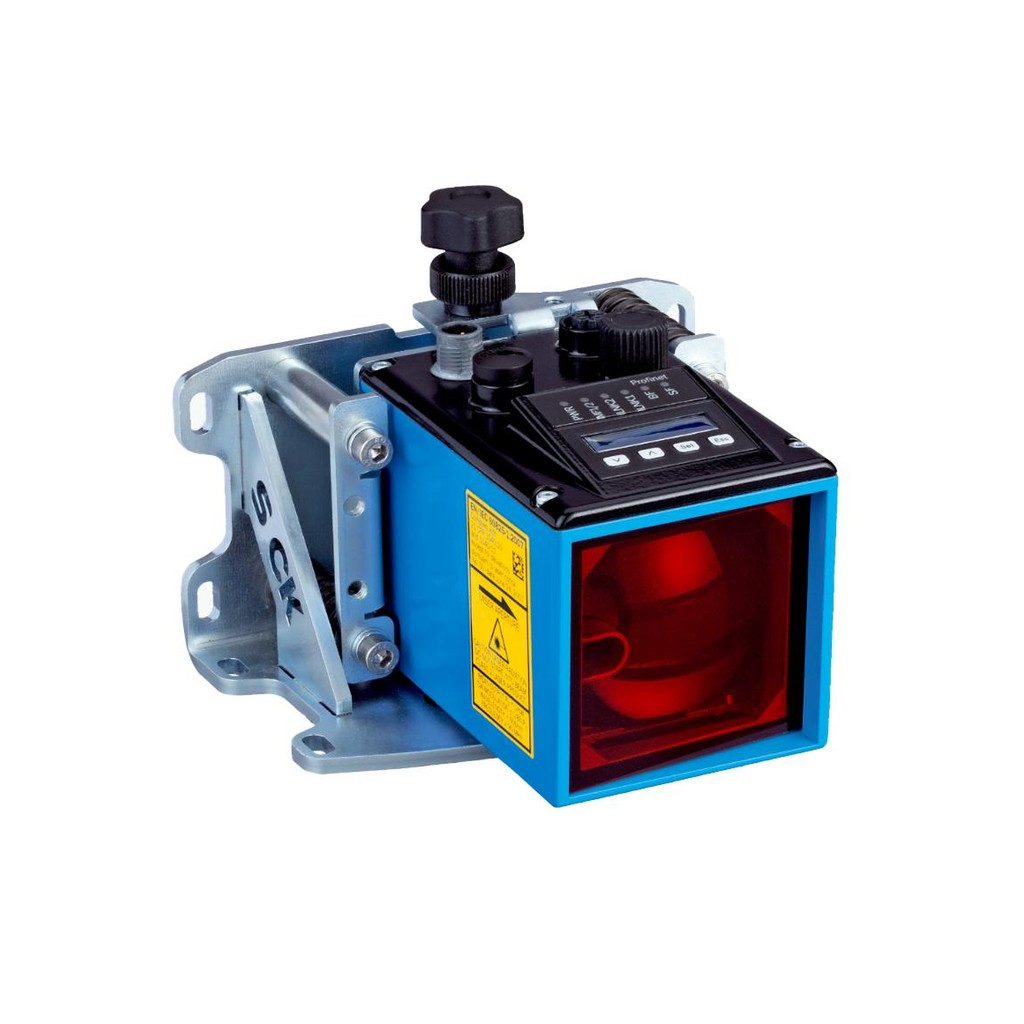
DL100-21AA2101 | SICK 15 m/s SSI Distance Sensor


Introduction:
The DL100-21AA2101 from SICK delivers 15 m/s tracking and ±2 mm accuracy for ASRS positioning over 100 m on Diamond Grade tape.
 Customer Reviews
UBEST Automation – Trusted Global Automation Parts Supplier
We offer a wide range of in-stock industrial automation spare parts. All products come with a 12-month warranty and a 30-day refund for quality issues.
Product Attributes:
Notice: For real-time prices and inventory, please click the button below to contact us.
When Throughput Defines the Warehouse
Over the past two decades, automated storage and retrieval systems have shifted from steady conveyors to high-speed shuttles. As a result, engineers now demand sensors that keep pace with accelerating loads. The SICK DL100-21AA2101 answers that shift. It is a phase-shift optical time-of-flight laser distance sensor with a maximum tracking velocity of 15 m/s and a measuring range of 0.15 m to 100 m on Diamond Grade reflective tape. Consequently, it suits mission-critical positioning tasks where speed and repeatability must coexist.
How the DL100-21AA2101 Performs Under Load
At the core of this sensor sits a visible red laser diode with a 658 nm wavelength and Class 2 classification per IEC 60825-1:2014. The device measures distance through phase-shift optical time-of-flight, which yields a repeatability of 0.5 mm to 1 mm and a typical accuracy of ±2 mm to ±3 mm. Furthermore, the internal measurement rate reaches 1 ms, although the actual fieldbus cycle governs output timing. As a result, the sensor can track fast-moving carriages without losing position lock.
Beyond raw speed, This unit handles acceleration up to 15 m/s². This capability matters in ASRS applications where shuttles start and stop abruptly. Meanwhile, the aluminum die-cast housing with an acrylic glass optical window protects the optics in rugged environments. The IP65 rating per EN 60529 further seals the unit against dust and water jets.
Key Specifications at a Glance
- Operating temperature: -20 °C to +55 °C for continuous operation.
- Storage temperature: -40 °C to +75 °C for non-operating periods.
- Input voltage: DC 18 V to 30 V with reverse-polarity protection.
- Power consumption: Typically 8 W to 10 W.
- Communication: SSI (Synchronous Serial Interface) with Gray or Binary code.
- Digital outputs: Two push-pull outputs (PNP/NPN, configurable B/Q, ≤ 100 mA).
- Electrical connection: M12 4-pin A-coded male for power; M12 8-pin female for SSI bus.
- Weight: Approximately 800 g.
- Dimensions: 69.4 mm x 82.5 mm x 100.2 mm.
Each value above comes directly from the manufacturer's data. For any parameter not listed, refer to the official datasheet.
Where This unit Fits in Oil & Gas and Logistics
Although designed for automated storage, this sensor also supports demanding oil and gas logistics. For instance, pipe handling cranes can use the 100 m range to position loads along storage racks. The 15 m/s tracking velocity keeps pace with fast shuttle movements. In addition, the SSI interface integrates with many PLCs and motion controllers. Because the sensor operates from -20 °C to +55 °C, it suits climate-controlled warehouses and sheltered outdoor yards. Finally, the continuous condition monitoring tracks signal attenuation, laser diode aging, and temperature, which supports predictive maintenance.
Installation and Setup Notes
Mount This unit using its optical 3-axis alignment bracket compatibility. First, verify that the supply voltage stays within DC 18 V to 30 V. Second, connect the M12 4-pin power connector and the M12 8-pin SSI bus connector. The integrated LC display and menu navigation simplify parameter checks. During commissioning, confirm the SSI code format (Gray or Binary) matches the controller. Also, ensure the reflective tape is Diamond Grade and free of obstructions. For wiring details beyond the datasheet, consult SICK documentation.
Reliability and Maintenance
This unit is built for demanding environments. Its aluminum housing and PMMA window resist dust and moisture. Periodic inspection should check the optical window for buildup and verify the mounting alignment. Because the sensor monitors its own laser diode aging and signal level, maintenance teams can schedule service before failures occur. This condition monitoring supports reliability you can depend on in mission-critical operations. Always follow the manufacturer's safety manual for Class 2 laser products.
Frequently Asked Questions
Q: What is the maximum tracking velocity of the SICK unit?
A: The SICK unit tracks up to 15 m/s, which suits high-speed automated storage and retrieval systems.
Q: What input voltage does This unit require?
A: The sensor operates from DC 18 V to 30 V and includes reverse-polarity protection.
Q: What is the operating temperature range of This unit?
A: This unit operates from -20 °C to +55 °C and stores from -40 °C to +75 °C.
Q: Which communication protocol does This unit use?
A: It uses SSI (Synchronous Serial Interface) with Gray or Binary code, plus two configurable push-pull digital outputs.
Q: How accurate is This unit?
A: Typical accuracy is ±2 mm to ±3 mm, with repeatability of 0.5 mm to 1 mm at 1 σ.
Contact PetroPartsOnline for parts suited to your application's requirements.
{"@context": "https://schema.org", "@graph": [{"@type": "Product", "name": "DL100-21AA2101 | SICK 15 m/s SSI Distance Sensor", "mpn": "DL100-21AA2101", "sku": "DL100-21AA2101", "brand": {"@type": "Brand", "name": "SICK"}, "description": "When Throughput Defines the Warehouse Over the past two decades, automated storage and retrieval systems have shifted from steady conveyors to high-speed shuttles. As a result, engineers now demand sensors that keep pace with accelerating loads. The SICK DL100-21AA2101 answers that shift. It is a phase-shift optical time-of-flight laser distance sensor with a maximum tracking velocity of 15 m/s and a measuring range of 0.15 m to 100 m on Diamond Grade reflective tape. Consequently, it suits miss", "image": ["https://www.petropartsonline.com/wp-content/uploads/2026/10/1793077706-api_image__fpab40755e.jpg", "https://www.petropartsonline.com/wp-content/uploads/2026/10/1793077713-api_image__fp5565357f.jpg", "https://www.petropartsonline.com/wp-content/uploads/2026/10/1793077719-api_image__fp631d8146.jpg"]}, {"@type": "FAQPage", "mainEntity": [{"@type": "Question", "name": "Q: What is the maximum tracking velocity of the SICK unit?", "acceptedAnswer": {"@type": "Answer", "text": "A: The SICK unit tracks up to 15 m/s, which suits high-speed automated storage and retrieval systems."}}, {"@type": "Question", "name": "Q: What input voltage does This unit require?", "acceptedAnswer": {"@type": "Answer", "text": "A: The sensor operates from DC 18 V to 30 V and includes reverse-polarity protection."}}, {"@type": "Question", "name": "Q: What is the operating temperature range of This unit?", "acceptedAnswer": {"@type": "Answer", "text": "A: This unit operates from -20 °C to +55 °C and stores from -40 °C to +75 °C."}}, {"@type": "Question", "name": "Q: Which communication protocol does This unit use?", "acceptedAnswer": {"@type": "Answer", "text": "A: It uses SSI (Synchronous Serial Interface) with Gray or Binary code, plus two configurable push-pull digital outputs."}}, {"@type": "Question", "name": "Q: How accurate is This unit?", "acceptedAnswer": {"@type": "Answer", "text": "A: Typical accuracy is ±2 mm to ±3 mm, with repeatability of 0.5 mm to 1 mm at 1 σ. Contact PetroPartsOnline for parts suited to your application's requirements."}}]}]}